How to Choose the Right Bitumen Heater for Your Needs?
When selecting the right Bitumen Heater, understanding its specifications is crucial. A recent report by the Asphalt Institute highlights that the demand for efficient asphalt heating technology has increased by 30% over the last five years. This surge is driven by the growing need for quality road construction materials.
The Bitumen Heater is essential for construction projects across various scales. The choice of heater affects production efficiency and overall project costs. A subpar heater can lead to uneven heating, increasing material waste. Moreover, the right heater enhances the longevity of asphalt, ultimately leading to cost savings.
Choosing a Bitumen Heater involves considering factors like capacity, fuel type, and heating method. It's essential to reflect on the specific requirements of your project. Each project may demand a unique solution for bitumen heating. A misstep in selection can lead to operational inefficiencies, which is why making an informed choice is vital.

Understanding Bitumen Heating Requirements for Your Projects
When it comes to bitumen heating, understanding your project’s specific needs is crucial. Bitumen requires careful heating to maintain its properties. The right heater can make a significant difference in efficiency and quality. For instance, consider the temperature control features. This is essential for projects that demand precise heating. Poor temperature control can lead to overheating or inadequate heating, impacting the final product.
Tips: Always evaluate the heater’s capacity against your project size. A heater that is too small may not effectively manage the volume. Conversely, an oversized heater can waste energy and increase costs. Ensure you also check insulation standards. Good insulation minimizes heat loss and optimizes energy use.
Another important aspect is maintenance. Regular checks and servicing can prevent unexpected breakdowns and extend the heater's life. Consider the availability of spare parts and service technicians in your area. Without easy access to parts, downtime can become costly. Ultimately, the right heater should align with your specific heating demands while being reliable throughout the project’s lifecycle.
How to Choose the Right Bitumen Heater for Your Needs?
| Heater Type |
Heating Method |
Power Supply |
Heating Capacity (liters) |
Ideal Application |
| Direct Fire Heater |
Direct Flame |
Diesel |
200 |
Paving |
| Indirect Heating Jacket |
Heat Transfer Fluid |
Electric |
500 |
Roofing |
| Mobile Bitumen Heater |
Convection |
Propane |
300 |
Maintenance |
| Tank Heater |
Electric Heating |
Electric |
1000 |
Storage |
Types of Bitumen Heaters and Their Applications
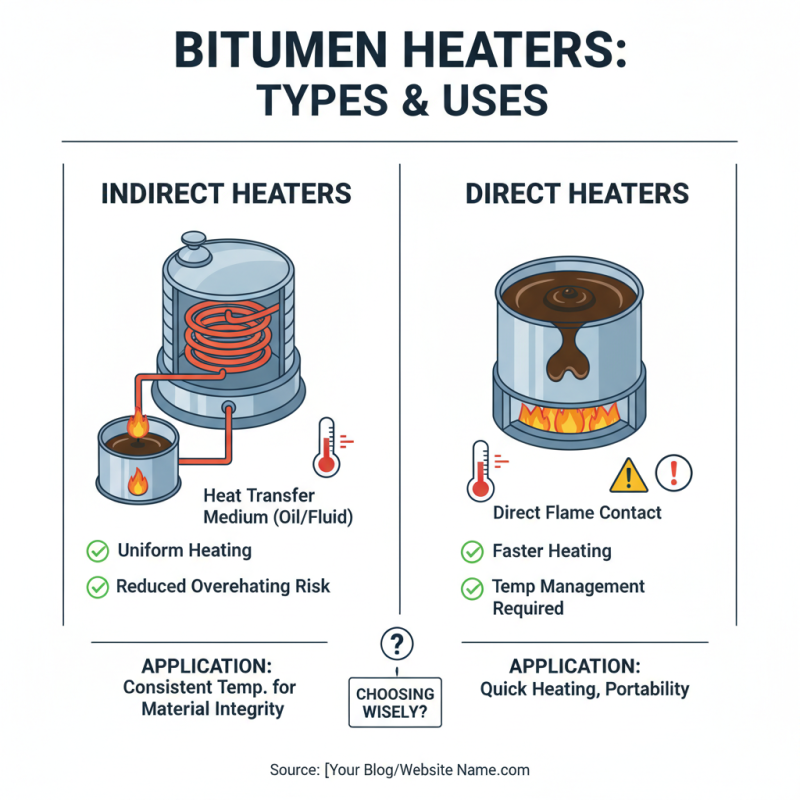
When choosing a bitumen heater, understanding the different types and their applications is crucial. There are primarily two categories of bitumen heaters: indirect and direct types. Indirect heaters use oil or another heat transfer medium to warm the bitumen. They are known for providing a uniform temperature, reducing the risk of overheating. This consistent heat is vital for maintaining the integrity of the bitumen. In contrast, direct heaters use flames to heat the bitumen directly. They are often quicker and can be more portable, but managing the temperature can be tricky and requires careful oversight.
Applications for these heaters vary widely. Indirect bitumen heaters are ideal for large-scale projects, where precision is necessary. Road construction and roofing are areas that benefit from this type. Meanwhile, direct heaters are often used for smaller jobs, like patching roads or smaller roofing applications. Each type has its advantages and challenges. Users must evaluate their specific needs, project size, and temperature control requirements. Recognizing these factors can significantly impact the effectiveness of the heating process.
Key Features to Look for in a Bitumen Heater
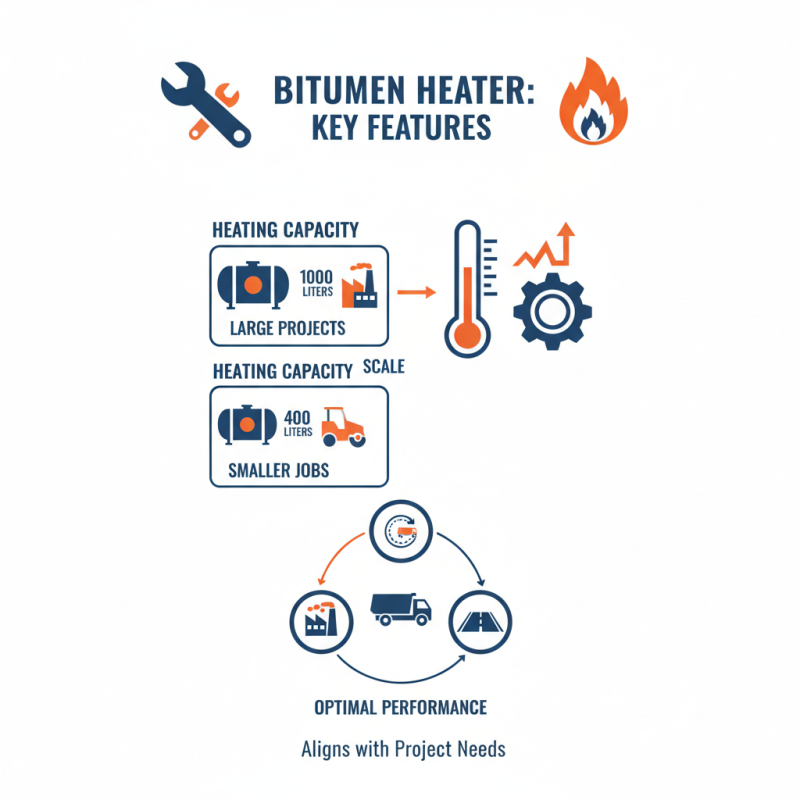
Choosing the right bitumen heater requires careful consideration of various features. A critical aspect is the heating capacity, which should align with project needs. Many industry reports suggest that heaters with a capacity of 1000 liters can meet the demands of large-scale operations. Smaller projects might only require heaters around 400 liters. Understanding the scale of your work is vital for optimal performance.
Temperature control is another essential feature. Precise temperature regulation ensures that the bitumen is heated evenly, preventing inconsistencies. A common standard in the industry notes that heaters should maintain a range between 160°C to 180°C for best results. Additionally, safety features like automatic shutdown systems can protect against overheating, which is crucial.
Durability is also significant. Bitumen heaters operate under harsh conditions, and materials must withstand wear and tear. Look for heaters made from high-quality steel or other robust materials. Investing in a heater with good insulation can save fuel and reduce overall costs. Regular maintenance becomes important to keep the heater operating efficiently. Ignoring it can lead to costly repairs later.
Evaluating Energy Efficiency and Operating Cost
When evaluating energy efficiency in bitumen heaters, look for key performance indicators. A study by the International Asphalt Research Council highlights that energy-efficient models can reduce operational costs by up to 30%. These heaters often use advanced insulation materials, minimizing heat loss. It's crucial to assess the heater's energy consumption versus output to ensure it's a worthwhile investment.
Operating costs can vary significantly. An analysis from the Asphalt Institute found that poorly insulated heaters can increase energy bills by an average of 20%. Monitoring fuel types is essential as well. Some heaters are designed to work with multiple fuel sources, impacting both efficiency and cost.
Choosing a model that aligns with your operational demands can lead to both greater reliability and cost savings over time.
Consider also the environmental impact. Eco-friendly heaters, despite a higher initial cost, typically offer long-term savings. They operate with lower emissions and less fuel consumption. This shift towards sustainability can enhance your business’s reputation, reflecting a commitment to greener practices. Yet, it's essential to balance these factors, ensuring your choice meets both budget and performance expectations.
Maintenance and Safety Considerations for Bitumen Heaters
When using a bitumen heater, safety should always come first. Regular inspections are crucial. Check the insulation, hoses, and connections for wear and tear. A damaged component can lead to leaks or accidents. It’s essential to replace any worn parts immediately. This minimizes risks and ensures efficient operation.
Maintenance routines can be simple yet effective. Clean the heat exchanger regularly to maintain performance. Scheduled oil changes keep the heater running smoothly. For many, these tasks may seem tedious. However, neglecting them can lead to costly repairs down the line. Implementing a checklist can help teams stay on track.
Proper training for operators is vital. They should understand the heater's functions and safety features. Encourage an environment where questions are welcomed. This can help avoid errors. Each operator-sharing their experiences can uncover valuable insights. Making time for safety discussions might feel like extra work, yet it enhances overall safety.
Bitumen Heater Types and Their Maintenance Costs