10 Essential Tips for Choosing the Right Rubber Heaters for Your Needs
When selecting the right Rubber Heaters, the decisions can profoundly impact operational efficiency and cost-effectiveness. According to a recent industry report by Research and Markets, the global rubber heating market is projected to grow at a CAGR of 5.2% by 2025. This underscores the increasing importance of choosing a suitable heating solution. Experts emphasize the significant role of proper selection in avoiding energy waste and equipment failure.
Dr. Emily Carter, a leading expert in thermal management solutions, states, "The right Rubber Heaters can enhance production reliability and reduce downtime." With various materials, sizes, and technologies available, understanding your specific needs is critical. Temperature control, energy efficiency, and durability are essential factors to consider.
However, making the right choice can be daunting. In the quest for the perfect heater, manufacturers often overlook critical specifications, leading to suboptimal performance. Reflect on your unique requirements carefully. A mismatch in heater selection may result in unexpected costs and operational setbacks. Thus, informed decisions not only boost productivity but also contribute to sustainability goals in the long term.

Understanding Different Types of Rubber Heaters Available in the Market
When selecting rubber heaters, understanding the types available is vital. The market offers various options, each designed for specific applications. Silicone rubber heaters are among the most popular. They are flexible and can conform to different shapes. Their ability to operate at high temperatures makes them suitable for industrial tasks.
Fluoropolymer heaters are another option. They offer exceptional chemical resistance. This makes them perfect for harsh environments, such as laboratories or manufacturing sites. However, they can be prone to damage if mishandled. Users must ensure proper installation practices.
Moreover, consider custom options if standard heaters do not meet your needs. These can be tailored in size and wattage, accommodating unique requirements. But keep in mind, custom solutions usually take longer to manufacture. The decision should weigh both immediate and long-term needs carefully, reflecting both budget and application demands.
10 Essential Tips for Choosing the Right Rubber Heaters for Your Needs
| Aspect |
Description |
Typical Applications |
Advantages |
Considerations |
| Silicone Rubber Heaters |
Flexible heaters suitable for various applications. |
Plastics manufacturing, food processing. |
High flexibility, fast heating. |
Limited exposure to extreme temperatures. |
| Kapton Heaters |
Thin heaters with excellent thermal performance. |
Electronics applications, scientific instruments. |
Very thin, can be shaped easily. |
May require careful handling due to fragility. |
| Foil Heaters |
Heating elements made from metal foil. |
Automotive applications, industrial processes. |
Cost-effective, easily customizable. |
Limited lifespan compared to other materials. |
| Self-Adhesive Heaters |
Heaters with an adhesive backing for easy application. |
Pipes, tanks, and other equipment. |
Easy installation, no additional fasteners needed. |
Adhesive may degrade over time. |
| Mica Heaters |
Used in high temperature applications. |
Curing processes, packaging equipment. |
Stable at high temperatures, durable. |
Heavier than other types, less flexible. |
Key Factors to Consider When Selecting Rubber Heaters for Specific Applications
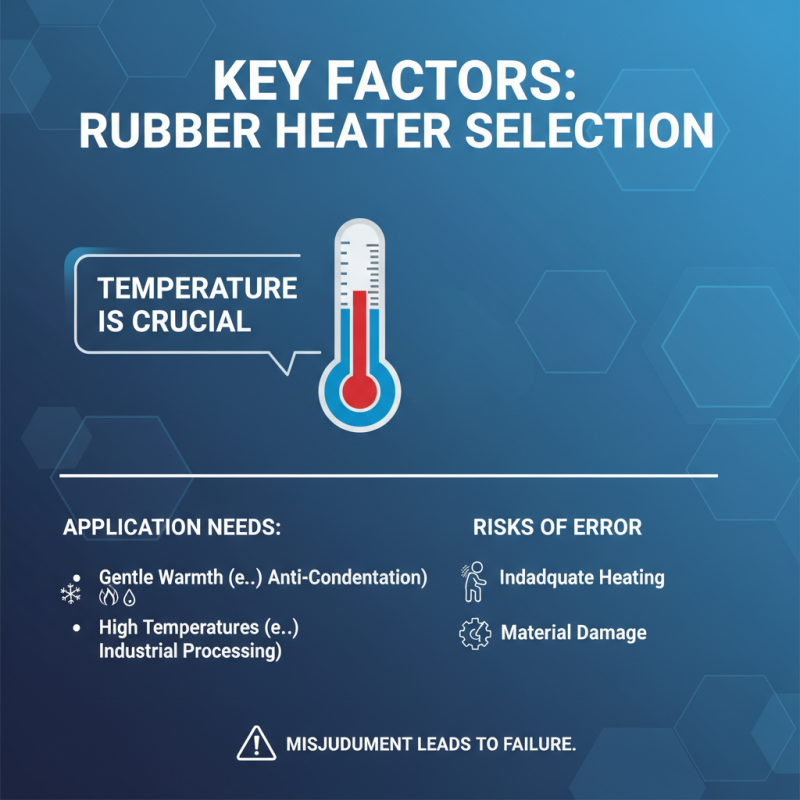
When selecting rubber heaters, consider the specific applications you'll use them for. The temperature range is crucial. Different processes require varying heat levels. For instance, some applications need gentle warmth, while others demand high temperatures. Misjudging this can result in inadequate heating or damage to materials.
Another factor to weigh is the heater’s construction. Rubber heaters come in various styles and thicknesses. A thin heater may flex better, but it might lack durability. Conversely, thicker models can offer enhanced robustness but may not conform as easily to irregular surfaces. Balancing flexibility and strength is key.
Additionally, power requirements play a significant role. Assess the wattage necessary for your needs. Insufficient power can lead to slower heating times. However, excessive wattage can result in overheating. Many users fail to consider this balance, leading to inefficiencies. Aim for a heater that meets the demands of your application without over or under delivering.
Evaluating the Heating Performance and Efficiency of Rubber Heaters
When selecting rubber heaters, evaluating heating performance and efficiency is crucial. Industry reports indicate that the optimal heating efficiency can be up to 90% for high-quality rubber heaters. This means more heat is directed where it’s needed, reducing energy waste. Aim for heaters designed with better thermal conductivity to ensure even heat distribution. The surface temperature is also critical; heaters should reach desired temperatures quickly to enhance overall productivity.
Consider the size and installation area of the heater. A poorly sized heater can lead to uneven heating or inefficient operation. Research shows that using correctly sized heaters can improve energy savings by nearly 30%. Make sure to check the watt density of the heater. Heaters with higher watt densities can provide faster heating but may increase risks of overheating. Balance is key.
Always consult technical specifications. Look for heaters with good insulation ratings. Some heaters may not perform well in extreme conditions. Remember, not all heaters are equal. Testing under real conditions can reveal inefficiencies. This data can guide informed decisions on which heater meets specific needs.
Heating Performance of Different Rubber Heaters
Assessing Safety Features and Compliance Standards for Rubber Heaters
When selecting rubber heaters, safety features are paramount. Heating elements should comply with industry standards, such as UL or CE certifications. These certifications help ensure that the heaters are safe for industrial and commercial use. According to the National Fire Protection Association (NFPA), improper heater design accounts for a significant percentage of heating-related incidents. Always check for these certifications to reduce risks.
Materials used in rubber heaters also matter. Look for products made from high-quality, flame-retardant materials that can withstand extreme temperatures. Industry reports suggest that heaters with built-in over-temperature protection are more reliable. Such features prevent overheating and potential fires. However, not all manufacturers offer transparent data about their safety features or testing processes. This lack of transparency can lead to poor decisions.
Consider the installation environment. Heaters used in hazardous locations require additional safety measures. Reports indicate that about 40% of accidents occur due to improper installation. Companies should ensure that their heaters are designed for specific environments. Inadequate understanding of product limitations can lead users into dangerous situations. Conduct thorough research and consult industry experts to make informed choices.
Cost-Effectiveness: Balancing Quality and Budget in Rubber Heater Selection
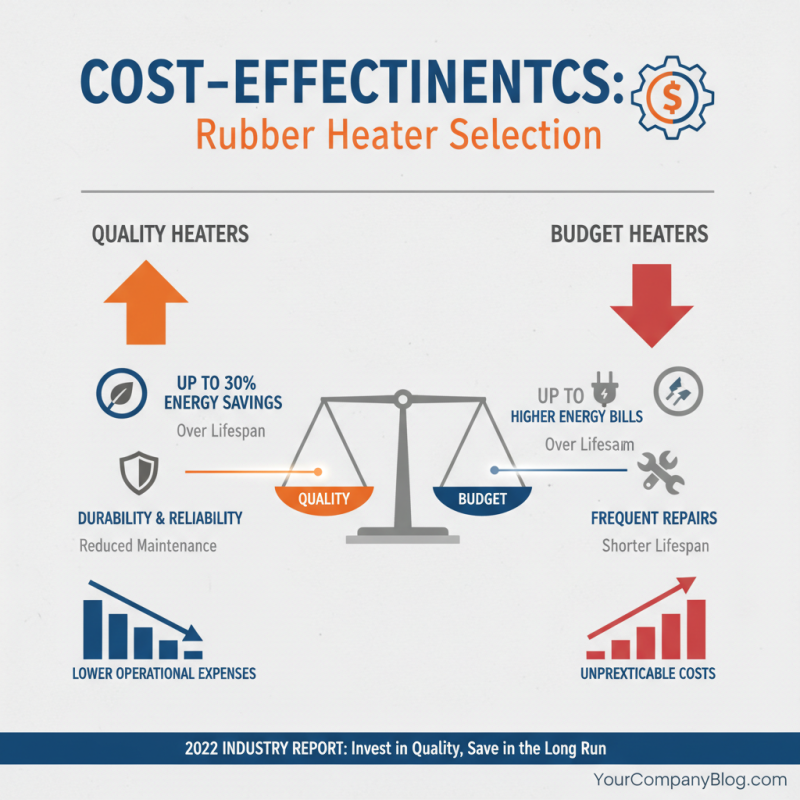
When selecting rubber heaters, cost-effectiveness is crucial. Many users underestimate the long-term savings that high-quality heaters bring. According to a 2022 industry report, investing in quality rubber heaters can reduce energy costs by up to 30% over their lifespan. This can significantly lower your overall operational expenses.
However, balancing quality with budget can be tricky. Cheaper options often sacrifice durability, leading to frequent replacements. A study indicates that inferior heaters can fail within just two years, while premium products can last over a decade. This discrepancy highlights the importance of investing wisely. It’s essential to assess your operational needs and the specific applications of the heaters.
Importantly, not all expensive products guarantee better performance. Many users find themselves paying for brand names rather than real performance benefits. Thorough research and user reviews can help clarify the best options. Users should ask themselves if short-term savings are worth the potential long-term costs. Ultimately, understanding both your immediate budget and long-term needs is key to making an informed choice in rubber heater selection.