I. Basic Structure and Principles
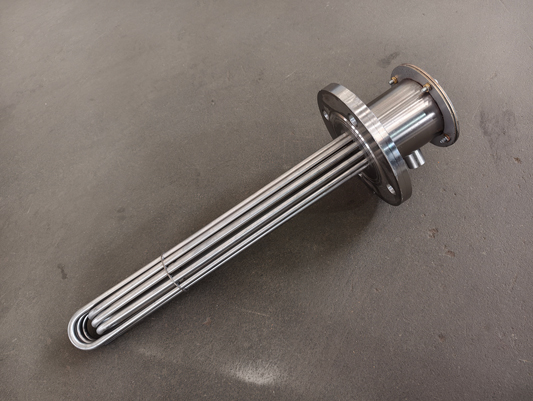
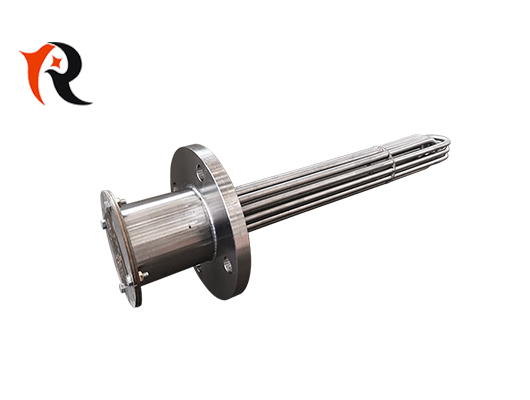
Structural Composition: The flange heating tube consists of multiple U-shaped (or straight) electric heating tubes fixed to the flange via TIG argon arc welding according to power requirements. It also features detachable fasteners (allowing individual replacement of single tubes). Each heating tube is a seamless metal tube with nickel-chromium resistance wire installed inside, and the gaps filled with high-purity magnesium oxide powder (insulating and thermally conductive). It is equipped with a sealed flange and junction box (explosion-proof/waterproof options available, IP65/IP66).
Flange Type: Chinese Standard / American Standard / Japanese Standard (DN32~DN1200), Material: Carbon Steel, 304/316L Stainless Steel;
Pipe materials: 304, 316L, titanium alloy, Incoloy 800H, etc., selected based on the corrosiveness of the medium;
Power range: from a few kW to several hundred kW, with common voltages of 220V/380V.
Working Principle: Upon electrification, the resistance wire generates Joule heat, which is conducted to the outer wall of the metal tube via magnesium oxide powder, directly immersing and heating the liquid (water, heat transfer oil, acids, or alkalis) or gas inside the container/pipeline. It achieves constant temperature automatic control in conjunction with a temperature probe and PID control cabinet.
II. Core Advantages
High power density: The surface load is 2 to 4 times that of conventional air heating tubes, with rapid heating and thermal efficiency exceeding 90%;
Compact structure and easy installation: The flange is directly bolted to the tank/device flange port without requiring additional supports, ensuring reliable sealing;
Flexible maintenance: Fasteners allow for individual replacement without the need for complete disassembly, reducing downtime costs;
Strong adaptability: Customizable explosion-proof and corrosion-resistant types, suitable for high-temperature, high-pressure, and flammable/explosive working conditions;
Automation-friendly: Capable of interfacing with DCS systems to enable remote monitoring and interlocking for overtemperature/dry burn protection.
III. Typical Application Scenarios
Petrochemical: Heating and trace heating of thermal oil, crude oil, and acid-base solutions for storage tanks and reactors;
Food and Pharmaceuticals: Constant temperature heating for cleaning water, ingredient solutions, and fermentation tanks;
Energy and Power: Boiler feedwater preheating, condensate heating;
Mechanical Manufacturing: Heating of hydraulic oil and quenching oil, mold preheating;
Environmental water treatment: Heating and insulation of electroplating solutions and circulating water.
IV. Key Points for Selection and Installation
Medium matching: 304 stainless steel for water; 316L or titanium for highly corrosive environments (hydrochloric acid, seawater); 310S or Incoloy alloy for high-temperature heat transfer oil;
Power and Surface Load: To prevent dry burning, the surface load of liquid media is typically controlled within 3~6 W/cm², with lower values for viscous oils;
Flange Standards and Sealing: Comply with equipment flange standards (GB, HG, ANSI), and use metal wound gaskets, graphite gaskets, or PTFE gaskets for sealing;
Electrical and Protection: Explosion-proof enclosures of Exd II BT4/CT4 rating must be selected for hazardous areas, with reliable grounding; over-temperature, current interruption, and leakage protection should be installed;
Installation Position: Ensure sufficient insertion depth to avoid localized overheating; when installed at the bottom, take care to prevent sediment buildup on the heating surface.
V. Common Faults and Precautions
Dry burning will instantly burn out the heating tube. Ensure the medium is fully submerged before powering on;
Scale and oil deposits can reduce efficiency and cause localized overheating, so regular cleaning or anti-scaling coatings are necessary;
For long-term storage, empty the medium and prevent moisture to avoid insulation degradation caused by hygroscopic magnesium oxide powder inside.
If you want to know more about our product, please contact us!
Post time: Mar-05-2026