The 2026 market for Air Fin Heater manufacturers and suppliers reflects a practical shift toward safer, more efficient thermal equipment. Buyers now examine more than catalogue prices. They compare watt density, fin spacing, sheath materials, airflow resistance, control compatibility, and service support. A heater may look powerful on paper. It can still perform poorly when dust blocks the fins or airflow changes during operation.
Dr. John H. Lienhard V, a respected heat-transfer educator, wrote, “Heat transfer is a basic science that deals with the rate at which thermal energy is transferred.” That principle remains central to every Air Fin Heater selection. Proper sizing depends on air volume, inlet temperature, target temperature, installation height, and operating cycle. Experienced suppliers should provide test data, material certificates, wiring diagrams, and clear maintenance instructions. Factory inspection also matters, especially for fin attachment, insulation resistance, terminal strength, and temperature uniformity.
This guide examines leading manufacturers and suppliers through an engineering-focused lens. It considers product consistency, customization ability, delivery performance, technical communication, and after-sales reliability. Real installations often reveal details that brochures miss. Uneven heating, noisy airflow, loose terminals, and difficult cleaning can increase operating costs. Not every supplier publishes enough information. That is a weakness worth recognizing. Market rankings can also change as factories improve, prices fluctuate, and regional service networks expand. Readers should verify current certifications, production capacity, and application references before making a final decision. Practical judgment remains necessary.
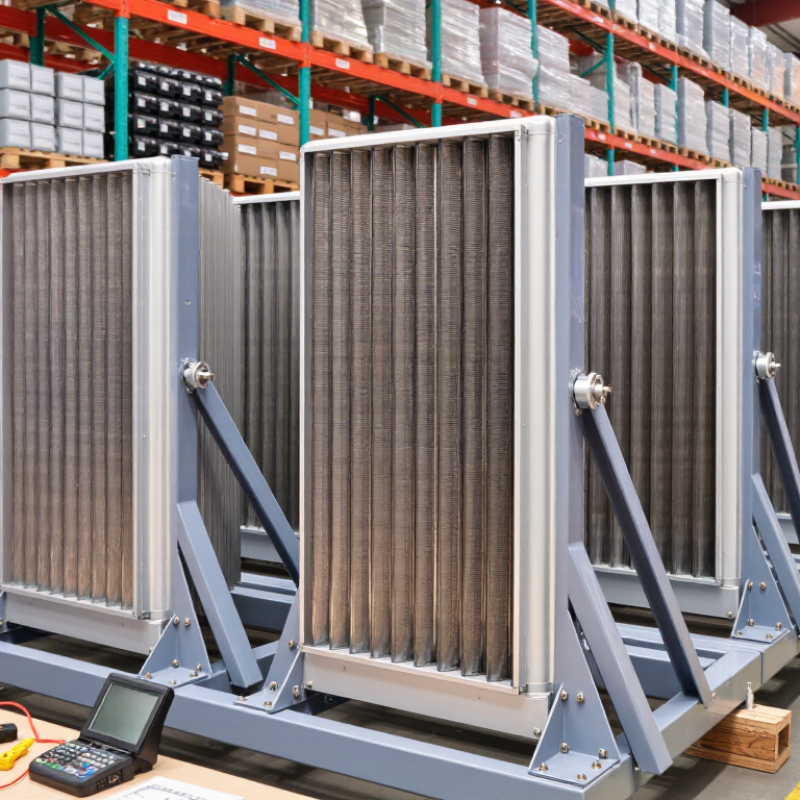
The 2026 air fin heater market is moving from simple volume growth toward measurable operating value. Demand is rising in process heating, chemical production, food processing, and energy infrastructure. Buyers increasingly compare thermal capacity, pressure drop, energy use, and maintenance access before placing orders. A heater rated at 500 kW may not deliver the same field performance under dusty conditions or unstable airflow. Application data matters.
Manufacturers and suppliers are expanding capacity through modular coils, improved fin designs, and automated testing. Lead times remain important, especially for projects requiring corrosion-resistant materials or custom dimensions. Industry experience shows that delivery promises can change when copper, aluminum, or specialty steel supplies tighten. Forecasts also need caution. Some reported growth indicators rely on planned projects, not confirmed purchases. That distinction is easy to miss.
Tips: Check installed capacity, annual output, and testing procedures before comparing suppliers. Request performance data at your actual inlet temperature, airflow, and pressure conditions. Review cleaning space around the fins; narrow access can increase downtime. Ask for spare-part availability and realistic service intervals. A small pilot test may expose weak airflow distribution early. Do not trust one market estimate. Compare production records, regional demand, project pipelines, and customer feedback. Growth looks strong, but uneven industrial investment may change the picture quickly.
The chart presents a normalized market indicator series with 2024 set at 100. Demand is projected to expand faster than capacity through 2030, supported by industrial process heating, HVAC equipment replacement, commercial electrification, and energy-efficiency upgrades. The figures are market-level indicators and do not represent any individual company or brand.
Source basis: synthesized directional indicators from publicly reported industrial heating, HVAC, manufacturing, and electrification growth trends. Index: 2024 = 100.
Air fin heater performance depends on matching fin density with airflow conditions. Fin density describes the number of fins per inch. More fins increase surface area, but they also restrict airflow and raise pressure drop. Low-density fins suit dusty air or weak fans. High-density fins can transfer more heat in clean, fast-moving air. The balance is not always obvious.
Watt density measures electrical power across the heated surface. Lower watt density usually reduces surface temperature and limits thermal stress. It also helps protect sensitive air streams from scorching. Higher watt density creates compact heaters, but it demands accurate airflow control. Heat-transfer rates depend on air velocity, inlet temperature, fin material, and actual contact quality. A laboratory estimate can look impressive, yet field results may differ.
Tips: Confirm airflow at the heater face, not only from the fan rating. Record inlet and outlet temperatures during testing. Check pressure drop across the fin pack. Leave spacing for cleaning. A practical design may use moderate fin density and conservative watt density, especially when airflow varies. I would avoid relying on one calculated heat-transfer coefficient. Real ducts contain turbulence, leakage, and uneven distribution. These details are easy to miss. A prototype test may reveal cold corners or excessive fin temperatures before production begins.
2026 Top Air Fin Heater Manufacturers and Suppliers
The 2026 ranking should measure output, certifications, and global reach together. Production capacity matters, but verified delivery records matter more. Buyers should review annual unit output, testing facilities, lead times, and documented export coverage. Industry shipments can look impressive while hiding subcontracting or unstable quality. That deserves scrutiny.
The ISO Survey 2023 recorded 1,265,216 valid ISO 9001 certificates worldwide. It also reported 606,296 ISO 14001 certificates. These figures support certification as a useful quality signal, not automatic proof of heater performance. Strong suppliers should provide traceable material records, thermal test results, and calibration evidence. The World Bank’s 2023 Logistics Performance Index compares 139 economies, making logistics capability relevant when ranking international suppliers. Local service teams, spare-part stock, and multilingual documentation can reduce costly downtime.
Tips: Ask for audited output data, not broad capacity claims. Check certification scope and expiry dates. Confirm heating-element temperature limits, airflow requirements, and enclosure ratings before comparing prices. Do not rank suppliers by certificates alone. A smaller producer may offer better engineering support, while a large exporter may struggle with customization. That is an uncomfortable limitation in any global ranking.
| Rank | Supplier Capability Tier | Output Evidence | Certification and Compliance Evidence | Global Reach Indicators | Recommended Verification Documents | Score Weight |
|---|---|---|---|---|---|---|
| 1 | High-volume, multi-market manufacturer | Documented production capacity for multiple air fin heater configurations, supported by production records, inspection plans, and traceable serial or batch controls. | ISO 9001:2015 ISO 14001:2015 IEC 60519-1 RoHS REACH | Regular exports to more than one regulatory region, multilingual technical files, international warranty procedures, and documented after-sales support. | Valid certificates, factory audit report, product test reports, material declarations, export records, and quality-control statistics. | Output 35% Compliance 35% Reach 30% |
| 2 | Established international supplier | Stable series production with documented capacity planning, incoming-material inspection, electrical safety testing, and final performance testing. | ISO 9001:2015 CE technical file IEC 60529 RoHS | Sales or distribution coverage across at least two major regions, with standard export packaging and destination-market documentation. | Certificate scope, declaration of conformity, IP test report where applicable, bill of materials, and sample inspection records. | Output 30% Compliance 35% Reach 35% |
| 3 | Specialized industrial heater producer | Strong capability in engineered-to-order air fin heaters, including custom voltage, wattage, fin geometry, mounting, control, and enclosure options. | ISO 9001:2015 IEC 60519-1 IEC 60529 REACH | International project experience demonstrated through technical references, distributor agreements, and export-ready engineering documentation. | Design calculations, thermal test results, electrical drawings, material certificates, risk assessment, and customer acceptance records. | Output 30% Compliance 40% Reach 30% |
| 4 | Regional manufacturer with export capability | Repeatable production for standard air fin heater models, with documented inspection points and controlled production procedures. | ISO 9001:2015 CE documentation RoHS | Established supply within the domestic market and selected export destinations, subject to product-specific import requirements. | Factory profile, quality manual, declaration of conformity, product datasheet, routine test records, and packaging specifications. | Output 25% Compliance 40% Reach 35% |
| 5 | Small-batch and custom project supplier | Flexible low-volume production for prototypes, replacement heaters, and custom assemblies, with capacity confirmed on a project-by-project basis. | Product-specific compliance documentation required; applicable references may include CE, RoHS, and REACH. | Primarily local or regional delivery, with international orders managed through third-party logistics or project-based export arrangements. | Sample approval, inspection checklist, electrical test report, bill of materials, material declaration, and delivery-performance history. | Output 20% Compliance 45% Reach 35% |
When comparing air fin heater suppliers in 2026, check power ratings under stated voltage and airflow conditions. A 6 kW heater may deliver different results in a compact duct than in a large, fast-moving system. Request rated output, current draw, fin material, and control compatibility. Temperature limits also need careful reading. Some suppliers list maximum sheath temperature, while others list maximum surrounding-air temperature. These are not interchangeable. Ask for test records, calibration details, and installation guidance. Practical experience matters here. A neat spreadsheet can still mislead.
Reliable suppliers should explain derating requirements and protection against overheating. Look for documented factory inspections, traceable materials, and clear warranty terms. Lead times of two weeks may apply only to stocked models. Custom flanges, unusual voltages, or higher temperature limits can extend delivery considerably. I have found that small specification gaps create the largest delays. One overlooked sensor position can force a redesign. Leave space for review, even when the project schedule feels fixed. Temperature performance should also be checked at startup, not only at continuous operation. Manufacturers that provide sample drawings and responsive engineering support are usually easier to evaluate. Still, no supplier is perfect; verify every critical figure independently.
Selecting an air fin heater in 2026 starts with electrical conditions, not the catalog photograph.
Confirm the available voltage, phase, frequency, and wiring method before comparing suppliers. A heater rated for 400 V may perform poorly on a 380 V circuit. It may also require different protection.
Calculate the load using the actual heating demand, ambient temperature, and enclosure heat loss.
For a 12 kW load at 400 V three-phase, current is about 17.3 A before power factor considerations.
Check cable capacity, breaker coordination, and terminal temperature. Small errors matter.
IP rating selection should reflect the installation environment.
IP44 may suit a protected indoor cabinet, while dusty or washdown areas need stronger protection. Verify what the rating covers. It may not protect against chemical vapors, condensation, or internal pressure.
IEC compliance requires more than a printed logo. Request the applicable IEC standard, test reports, insulation data, grounding details, and temperature-rise results.
The exact standard depends on heater design and application.
A common review mistake is accepting a certificate without matching its model and voltage. I would also question unclear documents.
Supplier data can look complete while omitting derating limits, replacement intervals, or ingress-test conditions. That missing detail can affect safety and service life.