How to Use a Thermal Couple for Accurate Temperature Measurement?

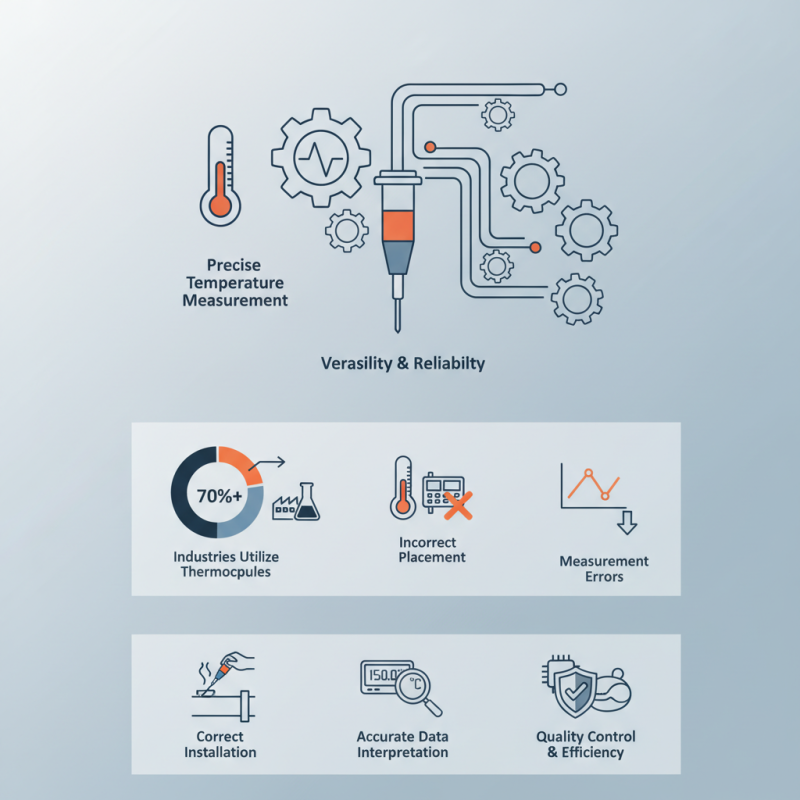
In industrial settings, precise temperature measurements are essential. According to a recent report by the International Society of Automation, temperature inaccuracies can lead to significant quality control issues. A Thermal Couple is widely recognized for its versatility and reliability in these applications.

This technology can measure a broad range of temperatures, providing crucial data in manufacturing, food safety, and scientific research. Studies show that over 70% of industries utilize Thermal Couples for their accuracy. However, incorrect placement or calibration issues can lead to measurement errors that impact overall process efficiency.

Understanding how to effectively use a Thermal Couple is vital. While they offer excellent performance, users must be aware of potential pitfalls. Mistakes in installation and interpretation can result in loss of data and costly consequences. This article will outline best practices for using Thermal Couples to enhance measurement accuracy.
How to Use a Thermal Couple for Accurate Temperature Measurement?

Understanding the Basics of Thermocouples in Temperature Measurement

Thermocouples are vital in the realm of temperature measurement. They rely on the thermoelectric effect, which means they generate a voltage when there is a temperature difference between two junctions. This phenomenon allows them to measure temperatures accurately across a range of applications, from industrial processes to scientific research.

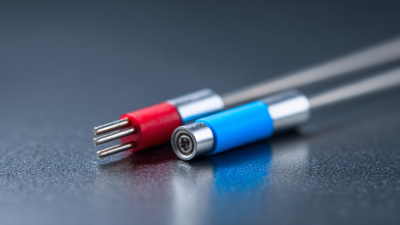
Each thermocouple consists of two different metal wires joined at one end. The other ends connect to a measuring device. When heated, the junction generates a specific voltage indicative of the temperature. This relationship is not always linear. Calibration is critical to ensure accuracy. Understanding this calibration process is essential for achieving reliable readings.

Users often find challenges in interpreting thermocouple data. Variations in wire quality or environmental factors can lead to erroneous results. Regular checks and recalibrations can help mitigate these issues. It's essential to recognize that while thermocouples are powerful tools, they require a deep understanding for optimal use.
Temperature Measurement Using Thermocouples

Types of Thermocouples and Their Temperature Ranges for Applications

Thermocouples are widely used in various industries for temperature measurement due to their versatility and accuracy. There are different types of thermocouples, each with specific temperature ranges suitable for various applications. For instance, Type K thermocouples operate efficiently in a range from -200°C to 1260°C, making them ideal for general purpose. Type J thermocouples are limited to -40°C to 750°C and are preferred in oxidizing environments. Understanding these ranges is critical for selecting the right thermocouple for your needs.

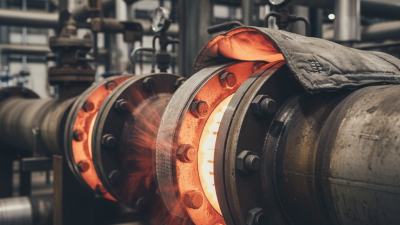
In high-temperature applications, Type S or Type R thermocouples are used, capable of measuring up to 1600°C. These are often employed in the aerospace and metal industries, reflecting their critical nature. A recent industry report noted that about 30% of temperature measurement errors arise from using inappropriate thermocouple types. Therefore, proper selection and knowledge are essential.

Tips: Always consult with technical documentation or professionals for thermocouple selection. Consider environmental factors that could affect readings. Regular calibration can enhance the accuracy of your measurements, minimizing errors that could lead to costly mistakes.

Calibration Techniques for Enhanced Thermocouple Accuracy

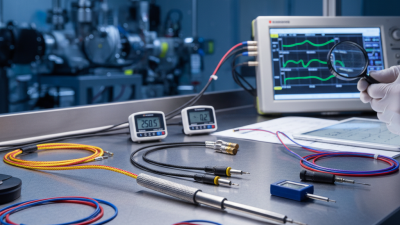
Calibration is essential for ensuring accuracy in thermocouple temperature measurements. A poorly calibrated thermocouple can lead to significant errors, affecting experimental outcomes. Regular calibration helps in identifying deviations from actual temperatures. This is crucial when precision matters, such as in laboratory environments or industrial processes.

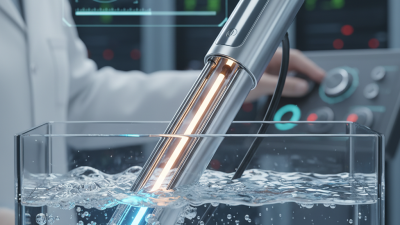
To calibrate a thermocouple, start with a known temperature source, such as a calibration bath. Immerse the thermocouple in the bath and record the readings. Compare these readings to the actual temperature. If discrepancies arise, adjustments or recalibrations may be necessary. Sometimes, simple errors occur, like incorrect type selection; these can easily be overlooked.

Field calibration should be part of routine maintenance. Use reference thermometers for cross-checking. This adds another layer of reliability to your measurements. Documenting the calibration results is important too. It provides a traceable history that can help identify trends over time. Calibration is a process that requires attention and reflection; assumptions about accuracy can mislead your results.

How to Use a Thermal Couple for Accurate Temperature Measurement? - Calibration Techniques for Enhanced Thermocouple Accuracy

Calibration Method Calibration Temperature Range (°C) Expected Accuracy (%) Notes
Multi-Point Calibration -200 to 1372 ±0.5 Recommended for wide range applications
Single Point Calibration 0 to 100 ±0.2 Best for limited application ranges
Ice Point Calibration 0 ±0.1 Simple and cost-effective
Reference Junction Compensation -50 to 150 ±0.3 Essential for accuracy in variable environments

Common Errors and How to Mitigate Them in Thermocouple Readings

How to Use a Thermal Couple for Accurate Temperature Measurement?

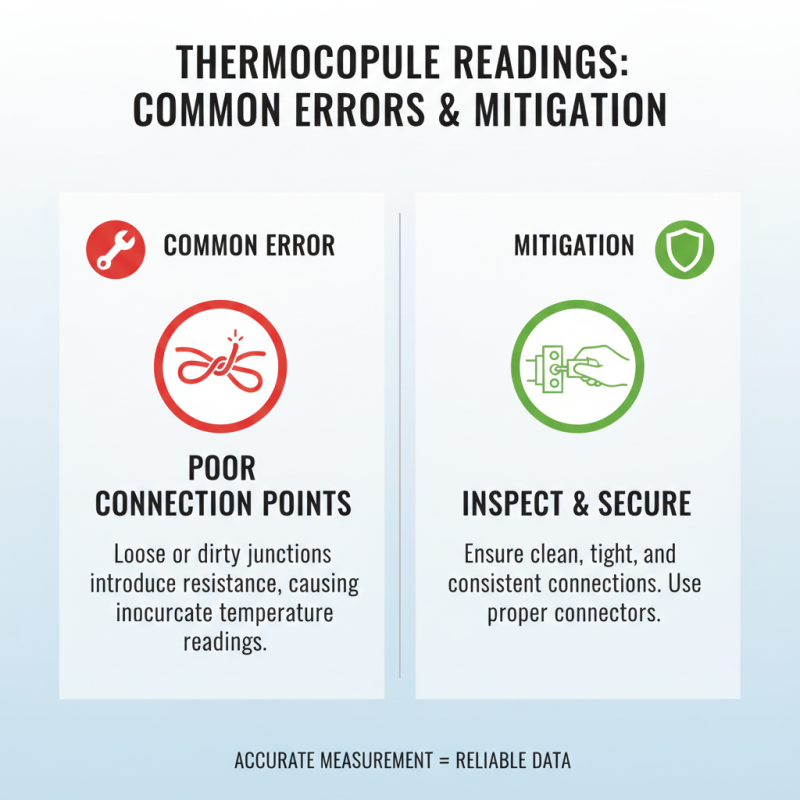
When using thermocouples for temperature measurement, common errors can lead to inaccurate readings. One prevalent issue is poor connection points. If the junction is not properly connected, it can introduce resistance, affecting the temperature reading. Always inspect the connection to ensure consistency.

Another common error is ambient temperature fluctuations. If the thermocouple's reference junction is exposed to varying temperatures, readings can become unreliable. Consider using thermal insulation or shielding to minimize these external influences.

Tips: Calibrate your thermocouple regularly to maintain accuracy. Be aware of the measurement environment and avoid abrupt temperature changes. Keep in mind that different thermocouple types may respond differently to the same temperature changes. Identifying these nuances can enhance your measurement reliability.

Best Practices for Installing and Using Thermocouples Efficiently

How to Use a Thermal Couple for Accurate Temperature Measurement?

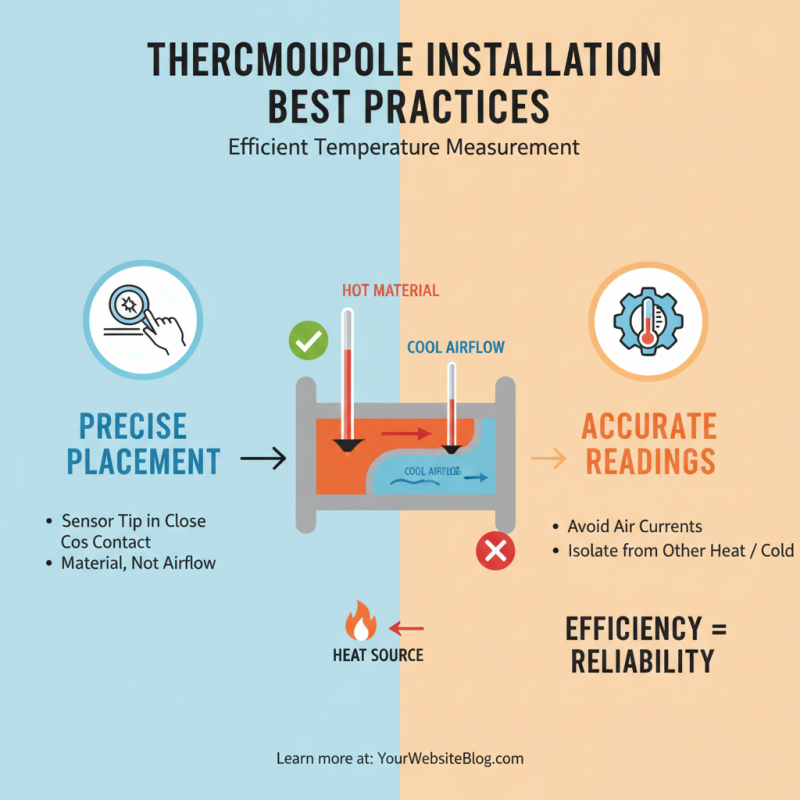
When installing thermocouples, precise placement is crucial. A poorly positioned thermocouple can lead to inaccurate readings. Ensure the sensor tip is in intimate contact with the material. Avoid placing it in airflow or near heat sources which can affect the temperature significantly.

Tips for ensuring accuracy:
- Select the right thermocouple type for your application. Different types have varying temperature ranges and response times.
- Regularly calibrate your thermocouple. This process should be part of your routine maintenance. Calibration can help catch drift errors early.

Another common mistake is using excessive insulation. While insulation protects thermocouples from environmental factors, too much can slow response time. Balance insulation with responsiveness for optimal results. Monitor your setup’s performance and adjust as needed. Engaging in continuous improvement is essential for long-term reliability in temperature measurements.