The core of selecting an oil electric heater lies in matching oil characteristics, precisely aligning power output, adhering to safety standards, while also considering service life and maintenance costs. Below are the complete selection steps and key considerations:
1. Clarify the basic working conditions and oil product properties (prerequisite for model selection)
1. Confirm the type of oil and its core physical properties
First, distinguish whether the medium is thermal oil, heavy oil / residue oil, lubricating oil, transformer oil, etc., and clarify its flash point, operating viscosity, maximum allowable usage temperature, coking tendency, and corrosiveness.
The operating temperature must be at least 20~30°C below the flash point of the oil to avoid the risk of flash fire;
High-viscosity and heavy oil (such as residuum oil) is prone to coking, requiring reduced surface load on heating tubes for subsequent model selection;
Sulfur-containing and corrosive oil products require upgrading to corrosion-resistant materials.
2. Organize operational parameters
Loop heating scenario: medium flow rate, inlet/outlet temperature, operating pressure, continuous/intermittent operation;
Static tank heating: Tank capacity, total oil volume, target heating time, and ambient working temperature.
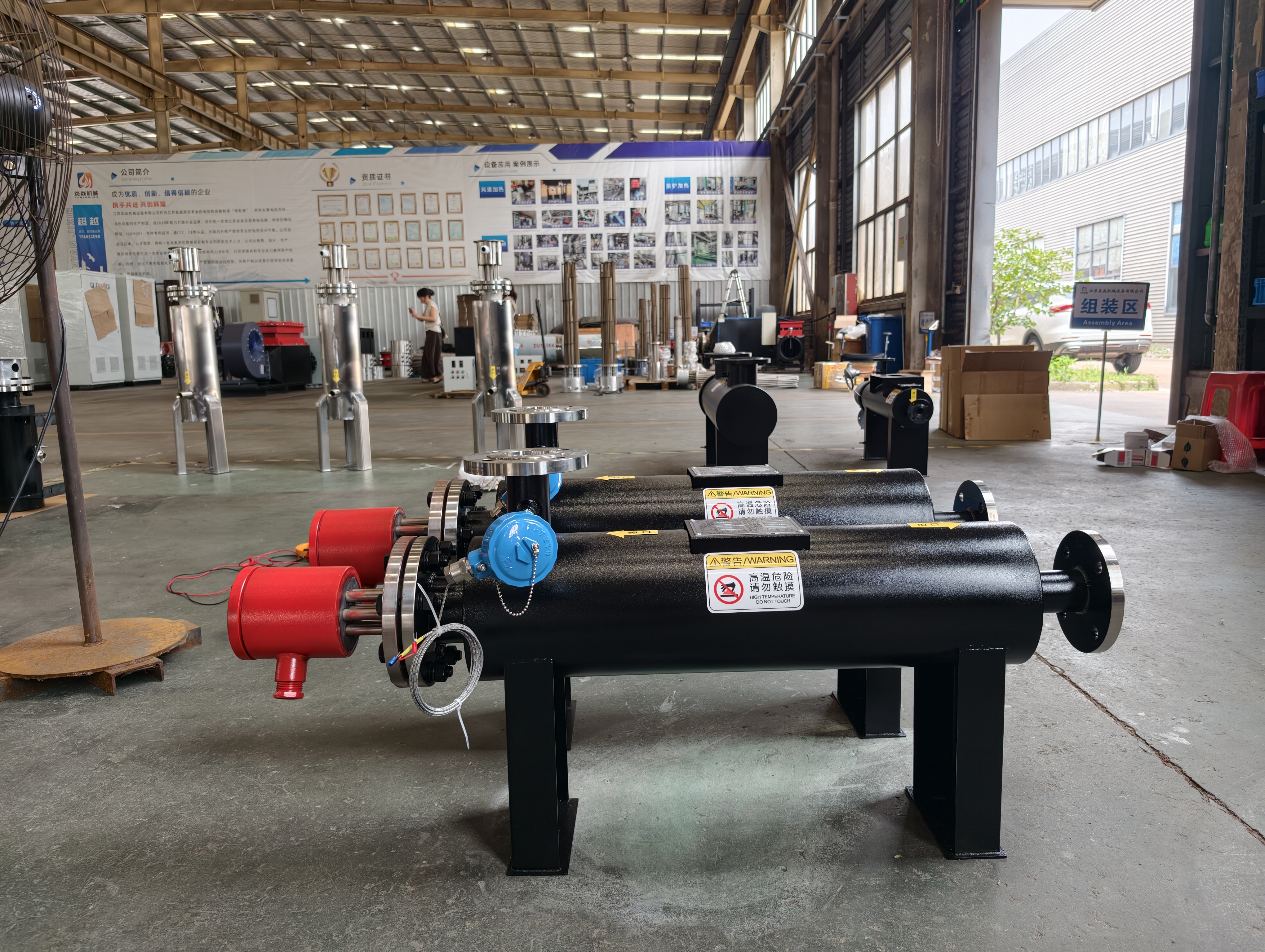
II. Precise Calculation of Heating Power (Key Indicator)
Insufficient power will fail to meet the temperature control requirements, while excessive power can easily cause localized overheating, coking, and significantly shorten the equipment's lifespan.
1. Formula for cyclic heating calculation
Power P (kW) = Flow rate (kg/h) × Oil specific heat capacity (kJ/kg・℃) × Temperature rise (℃) ÷ (3600 × Thermal efficiency)
The thermal efficiency of electric heaters is typically set at 0.95, with an additional power margin of 10% to 20% to offset extra loads such as pipeline heat dissipation and cold starts.
2. Static Tank Heating Calculation Formula
First, calculate the total heat required for oil heating, then convert it to the base power based on the required heating time. Next, account for the heat loss from the tank, and recommend a margin of 20%~30%.
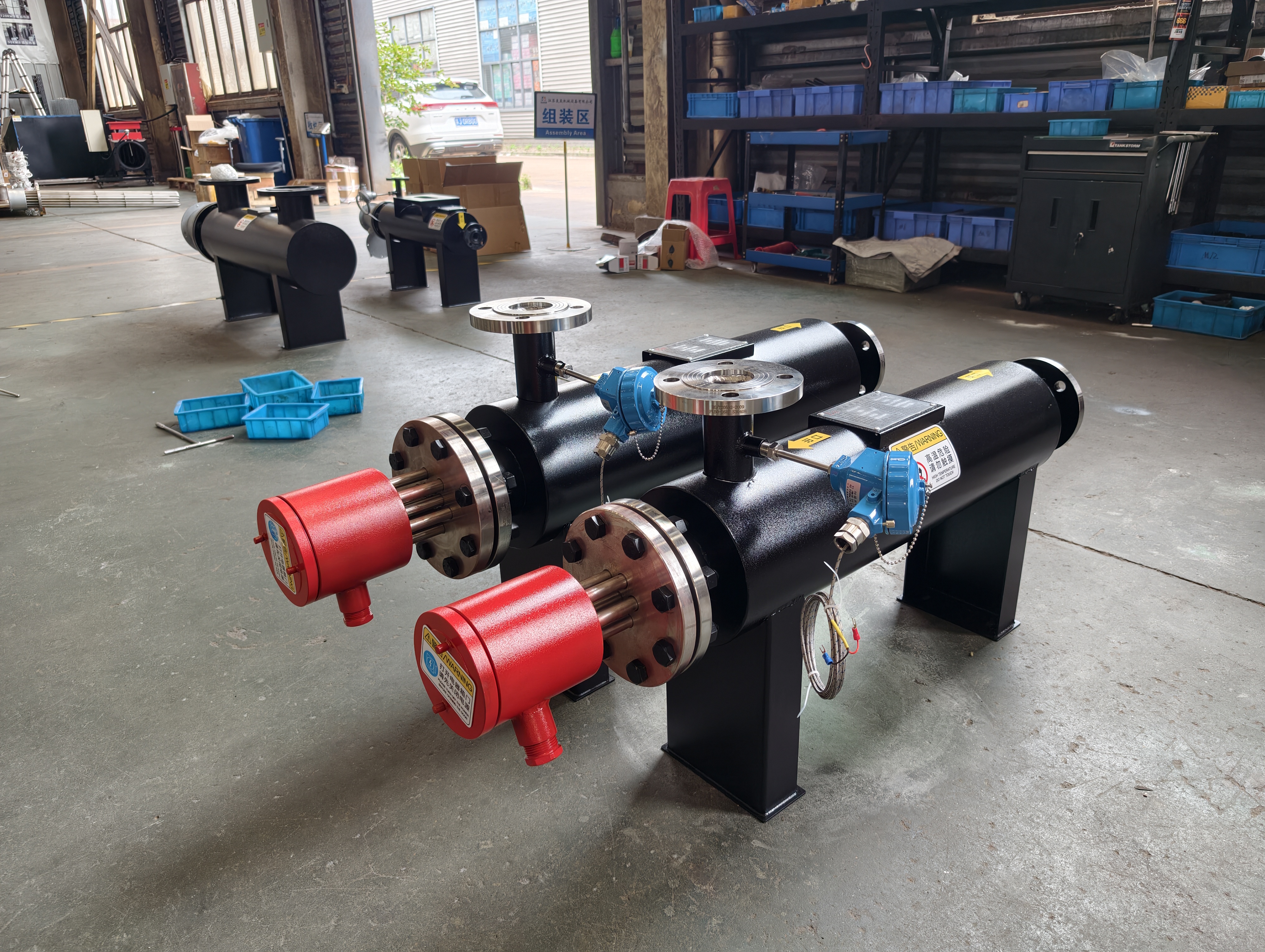
III. Select the appropriate structural type
According to the installation scenario and heating method, the mainstream structures are divided into two categories:
1. Flange immersion heater
Applicable scenarios: Static or low-speed circulating heating inside containers such as oil storage tanks, reactors, and oil tanks, making it the most versatile structure for oil product heating;
Features: Direct immersion in oil for heat exchange, high efficiency, easy installation and maintenance, and a wide power coverage range.
2. Pipe-type (fluid circulation) heater
Applicable scenarios: oil pipelines, thermal oil circulation systems, and online continuous heating operations, where oil products are heated while flowing through the pipeline;
Features: Even heating, high temperature control accuracy, often equipped with internal turbulence structures for enhanced heat exchange, suitable for high-flow continuous operation scenarios.
3. Selection and Supplement: For highly viscous and easily coking oil products, prioritize the pipeline type (to reduce fouling attachment through flow
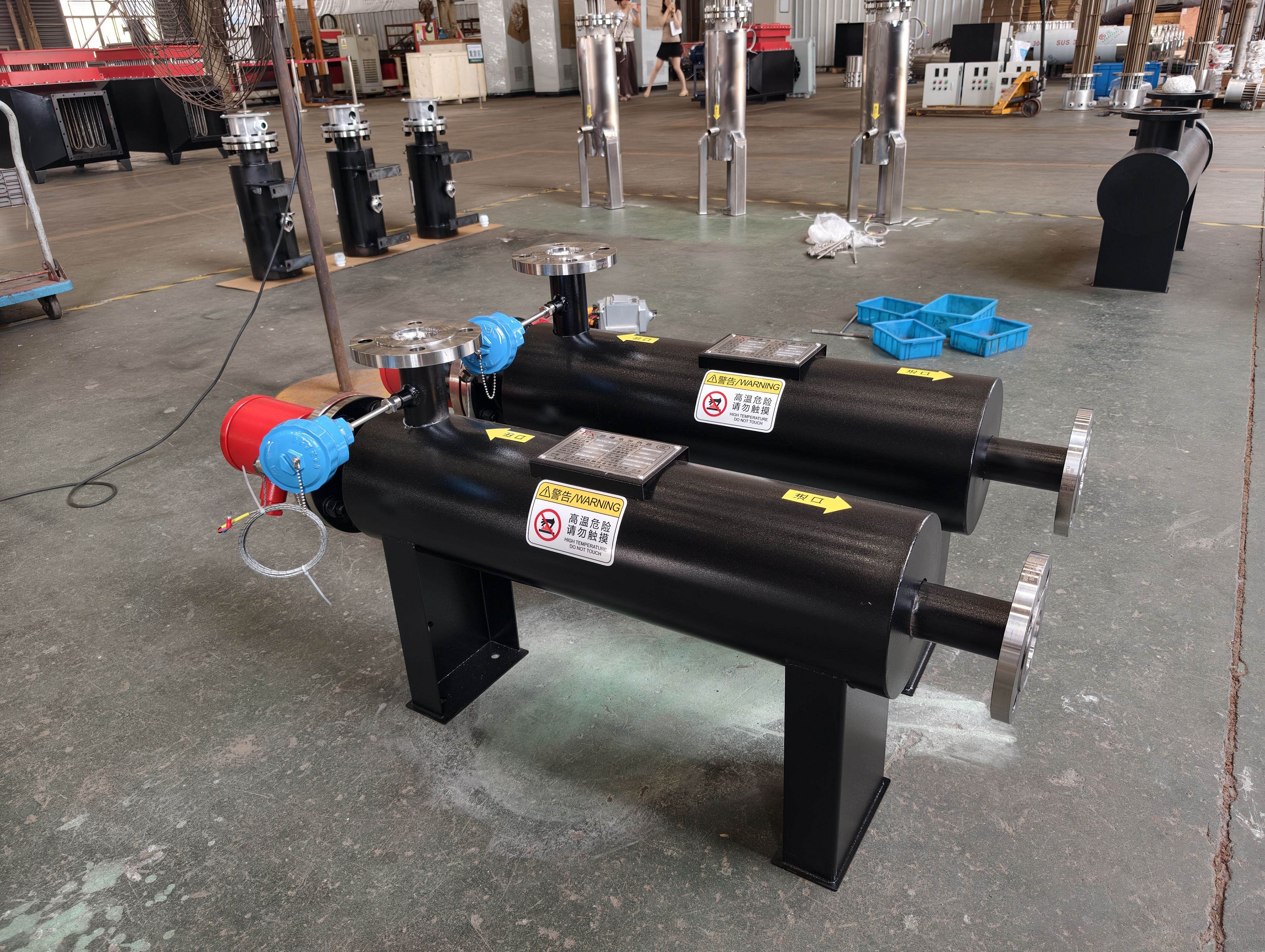
Ⅳ.Determine the material of the heating tube and the housing
The material directly determines the lifespan of the equipment and must meet temperature and corrosion resistance requirements
Carbon steel: Suitable only for heavy oil and general lubricating oil with no corrosiveness and operating temperatures ≤250°C. Low cost but prone to rust, making it unsuitable for environments with high cleanliness requirements.
2.304 Stainless Steel: A versatile and widely used primary material, compatible with the vast majority of mineral thermal oils and lubricating oils, resistant to general corrosion, with a long-term operating temperature ≤400°C, offering the highest cost performance.
3.316L Stainless Steel: Suitable for oil products containing sulfur or with mild corrosiveness, or for lubrication systems requiring food-grade or high cleanliness standards. Its corrosion resistance is superior to that of 304.
4.310S Stainless Steel: A high-temperature specialty material suitable for heating with thermal oil above 400°C, featuring excellent resistance to high-temperature oxidation.
5. Optimization suggestion: Polishing the surface of the heating tube can significantly reduce soot adhesion and extend the coke cleaning maintenance cycle.
Ⅴ.Equip with Safety and Temperature Control Configurations (Oil Heating Redline Requirements)
Petroleum products are mostly flammable and explosive media, and safety configurations must not be simplified
1. Explosion-proof rating matching
Select the corresponding explosion-proof rating based on the on-site hazardous area level. For conventional oil product scenarios, Exd II BT4 is sufficient; for scenarios involving highly hazardous media such as hydrogen or acetylene, Exd II CT4 must be selected, and the equipment must possess a formal explosion-proof certification.
2. Essential Safety Protection
Low liquid level protection: An immersion heater must be installed to prevent the heating tube from drying out and causing fire or equipment damage;
Dual Overtemperature Protection: Features separate medium overtemperature and heating tube surface overtemperature protection, automatically cutting power and triggering alarms when thresholds are exceeded to prevent overheating, coking, and flash ignition;
Basic electrical protection: Standard leakage, overload, and short-circuit protection are included. Additional overvoltage protection is required for pressure-bearing pipelines.
3. Temperature Control Method Selection
Normal operating conditions: Contactor switching control, low cost, temperature control accuracy of approximately ±5℃;
High-precision operating conditions: PID + solid-state relay (SSR) control, with temperature regulation accuracy up to ±1°C, suitable for precision applications such as constant-temperature heating of thermal oil.
Ⅵ.Installation and maintenance dimension adaptation
1. Installation method selection
Top mounted: Suitable for vertical storage tanks, inserted from the top flange for the most convenient installation and maintenance, suitable for scenarios with stable liquid levels;
Side mounted/angled insertion: Suitable for horizontal storage tanks and scenarios with large liquid level fluctuations, it can ensure that the heating tube is always submerged below the liquid level, avoiding the risk of dry burning;
The flange standard and pressure rating must be fully matched with the existing tank/pipeline (such as GB, HG, ANSI, etc.).
2. Strictly control surface load
The surface load (power per unit surface area of the heating tube, in W/cm ²) is the core parameter that affects the lifespan:
It is recommended to use ordinary heat transfer oil with a power of ≤ 1.5W/cm ²;
It is recommended that high viscosity coking prone oil products such as heavy oil and residual oil should be ≤ 1.0W/cm ²;
Low surface load can significantly reduce coking rate and greatly extend the service life of the heater.
3. Maintain convenience
Prioritize the use of detachable flange structures to facilitate regular removal of heating tubes and cleaning of coking; It is recommended to reserve inspection ports for pipeline type to facilitate internal cleaning and maintenance.
Ⅶ.Compliance and Qualification Verification
Pressure bearing pipeline heaters must comply with pressure vessel manufacturing specifications and have corresponding production qualifications;
Explosion proof products must hold a nationally recognized explosion-proof certificate, and the electrical part must comply with industrial electrical safety standards;
Special working conditions such as high pressure and strong corrosion require prior confirmation of equipment qualifications and pressure rating to avoid compliance risks.
If you want to know more about our product, please contact us!
Post time: Jul-13-2026