How to Choose the Best Airduct Heater for Your Needs?
Choosing the right Airduct Heater is essential for maintaining comfort in your space. Understanding your heating needs is crucial. Different models provide various benefits, and knowing what to look for can make a significant difference.
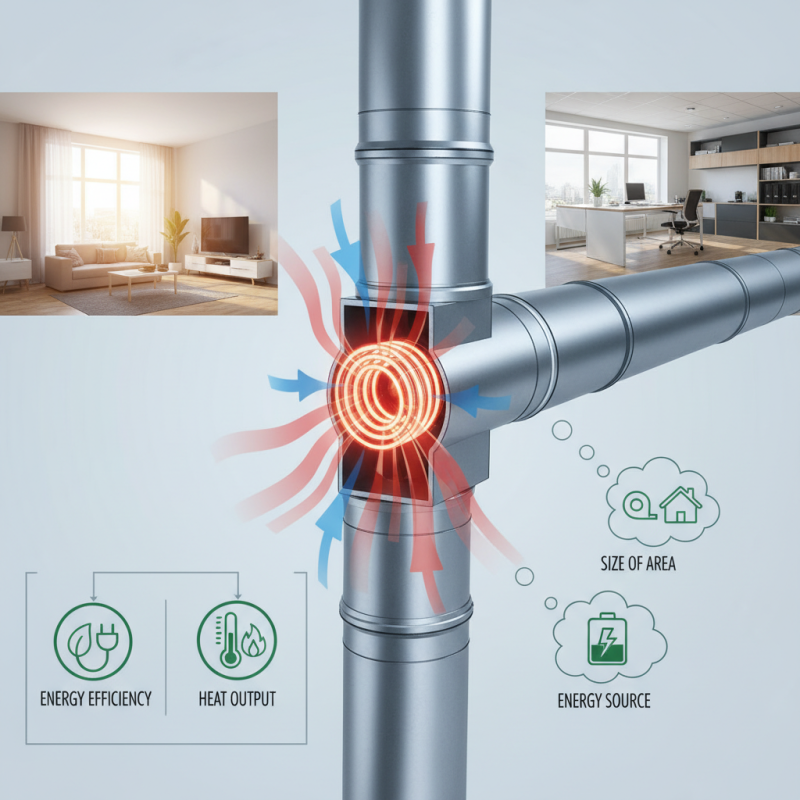
Airduct Heaters come in various sizes and types, catering to specific requirements. Some are energy-efficient, while others focus on heat output. Researching these features helps avoid costly mistakes. Consulting experts or online reviews can guide you in identifying the best options.
Selecting the ideal Airduct Heater is not always straightforward. Consumer preferences often lead to confusion. Always consider the size of your area and energy source. It's wise to reflect on your unique situation before making a decision. The right choice enhances both comfort and efficiency in your environment.
Understanding Airduct Heaters: Types and Functions
When selecting an airduct heater, understanding the various types and their functions is crucial. Airduct heaters primarily come in two forms: electric and hydronic. Electric heaters are compact and ideal for easy installation. They heat the air directly through electric resistance. On the other hand, hydronic heaters use water heated by a boiler. This option is often preferred for larger spaces due to its efficiency and effectiveness in maintaining temperature.
Tips: Consider the size of your space before choosing a heater. An undersized heater struggles to maintain warmth. Take note of your local climate too. If winters are harsh, investing in a more robust system may be wise.
While these heaters serve to enhance comfort, it's vital to reflect on your long-term needs. For example, electric models generally require more energy. Therefore, your utility bills may increase with extended use. It's worth considering the environmental impact too. Any upgrade or replacement should factor in energy efficiency ratings.
Tips: Regular maintenance can prolong the life of your unit. Dust and debris can accumulate within duct systems. Scheduling periodic checks can save on larger repairs down the line.
Evaluating Your Heating Needs: Size and Efficiency
When selecting an air duct heater, understanding heating needs is critical. Evaluating the size is often overlooked. A heater that is too small will struggle to maintain temperature, leading to inefficiency and increased energy bills. Conversely, an oversized heater can lead to rapid cycling, which can reduce its lifespan. According to the U.S. Department of Energy, efficiency ratings should match heating requirements. This helps achieve optimum performance.
Consider how square footage impacts heating choices. For instance, a room of 1,000 square feet typically requires a heater generating around 5,000 to 10,000 BTUs per hour. Each space varies, depending on factors like insulation and climate. A well-insulated home may need less heating power than a drafty one. Seek professional assessments if unsure.
Efficiency is equally important. Look for heaters with high energy efficiency ratings. The American Council for an Energy-Efficient Economy (ACEEE) indicates that energy-efficient models can save up to 30% on energy bills. However, be wary of claims. Researching real user experiences and consulting experts can provide valuable insights. Balancing size and efficiency is vital to make an informed decision on your air duct heater.
Key Features to Consider When Selecting an Airduct Heater
When selecting an airduct heater, key features significantly influence efficiency and performance. One essential factor to consider is the heating capacity. According to industry reports, a heater's output should match the size of the space it is intended to warm. For instance, a small heater may struggle to heat a large area effectively, leading to increased energy consumption and uneven temperatures.
Another important aspect is energy efficiency. Many modern airduct heaters offer high Seasonal Energy Efficiency Ratios (SEER) and Annual Fuel Utilization Efficiency (AFUE) ratings. Reports indicate that units with SEER ratings above 14 can save consumers up to 30% on electricity bills. This is crucial for both environmental impact and long-term cost savings.
Installation type is also worth examining. Airduct heaters come in various designs, including temporary and permanent setups. A temporary heater may seem like a quick fix, but it often lacks the reliability needed for consistent heating. Additionally, consider safety features. Overheat protection and flame sensors are vital. They help prevent accidents, a major concern in residential heating. Always analyze your space and needs carefully. Each choice impacts not just comfort but also safety and financial efficiency.
How to Choose the Best Airduct Heater for Your Needs? - Key Features to Consider When Selecting an Airduct Heater
| Feature |
Description |
Importance |
| Power Rating |
Measured in kilowatts (kW), this determines the heating capacity. |
High importance for efficiency. |
| Size and Dimensions |
Must fit within existing ductwork; measured in inches. |
Moderate importance for installation. |
| Temperature Control |
Includes thermostats and zone heating options. |
High importance for comfort and efficiency. |
| Energy Efficiency Rating |
How effectively the heater converts electricity to heat. |
Very high importance for cost savings. |
| Safety Features |
Includes overheat protection and automatic shutoff. |
Critical importance for home safety. |
| Material Quality |
Durability and resistance to corrosion. |
High importance for long-term use. |
| Installation Requirements |
Complexity and professional help needed. |
Moderate importance to consider upfront cost. |
Comparing Energy Sources: Electric vs. Gas Airduct Heaters
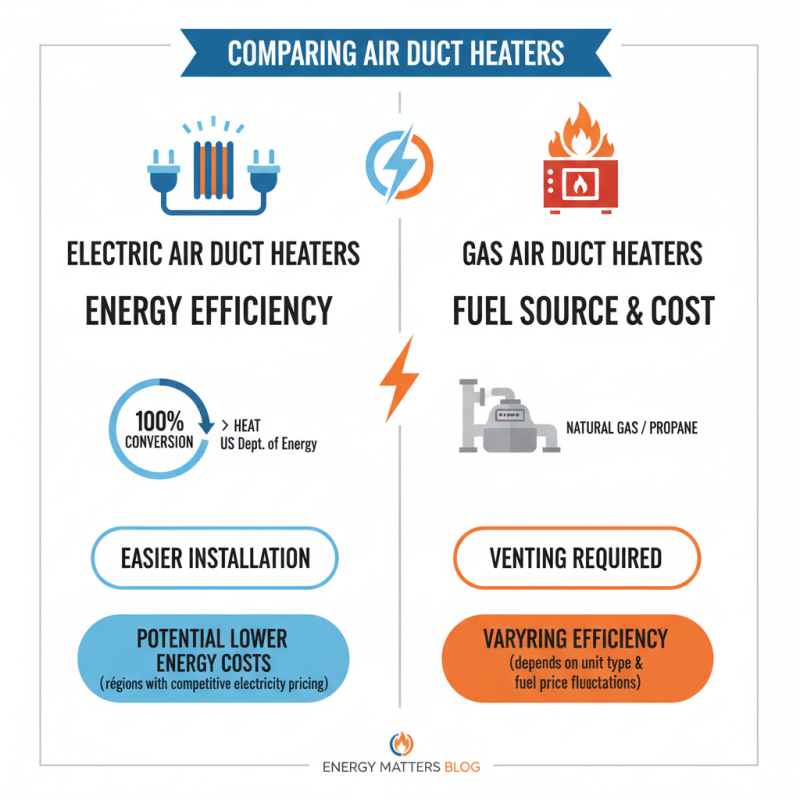
When considering air duct heaters, it's essential to compare energy sources. Electric and gas air duct heaters offer distinct advantages and drawbacks. Electric heaters are highly efficient and easier to install. According to the U.S. Department of Energy, electric heaters convert about 100% of their energy into heat. This efficiency can result in lower energy costs, especially in regions where electricity is competitively priced.
However, gas heaters are often favored for larger spaces. They typically heat up faster and can provide a more substantial output. For example, reports from energy agencies show that gas heaters can produce heat at a rate of 100,000 BTUs per hour or more. This makes them suitable for industrial applications or homes with extensive heating needs. Nonetheless, gas prices fluctuate, affecting the overall cost-effectiveness of these systems. It's vital to assess energy prices in your area before making a choice.
Another factor to consider is maintenance. Electric heaters usually require less upkeep, reducing overall expenses. Conversely, gas heaters may necessitate regular checks for leaks and venting issues. This adds complexity and potential long-term costs. Balancing initial costs, efficiency, and maintenance is crucial when selecting the right air duct heater for your needs.
Installation and Maintenance Tips for Optimal Performance
Proper installation and maintenance are crucial for the optimal performance of an air duct heater. A well-installed unit can enhance efficiency by up to 30%, according to the Energy Savings Association. Incorrect installation may lead to heat losses, increasing energy bills. Always ensure that the heater is fitted tightly to the ductwork to prevent air leaks.
Regular maintenance is equally important. Check the heater for any dust accumulation. Dust can act as an insulator, reducing the heater's efficiency. Another key tip is to inspect the thermostat regularly. A malfunctioning thermostat might not signal the heater correctly, risking overheating or inadequate heating.
Finally, consider professional inspections annually. Research shows that regular professional maintenance can prolong the life of your heater by up to 50%. Maintaining cleanliness, checking for leaks, and ensuring proper insulation can make a significant difference. Don’t overlook the small details; they can greatly impact performance.