
2026 Top Hot Oil Heater Types for Global Buyers
Choosing the right Hot Oil Heater in 2026 requires more than comparing heating capacity and purchase price. Global buyers now examine energy efficiency, thermal stability, maintenance access, control accuracy, and regional compliance. A heater that performs well in a food-processing plant may not suit a chemical facility or asphalt operation.
This guide introduces the leading Hot Oil Heater types for international industrial applications. It covers electric, gas-fired, diesel-fired, horizontal, vertical, and modular systems. Each design offers practical advantages and clear limitations. Electric models provide clean operation and precise control, while fuel-fired units can support high-temperature duties where power availability is limited. However, operating costs vary significantly by location.
Details matter.
A reliable comparison should consider heat-transfer fluid compatibility, pump performance, expansion-tank design, insulation quality, burner safety, and service support. Buyers should also verify certifications, documentation, spare-part availability, and local installation requirements before placing an order. These factors can affect long-term value more than the initial quotation.
Some recommendations remain imperfect. Project conditions differ, and published efficiency figures may not reflect actual workloads, weather, or maintenance habits. A smaller heater may seem economical but struggle during peak demand. An oversized system may waste energy and cycle unnecessarily. Careful load calculation is essential.
With practical selection criteria and transparent technical discussion, this overview helps engineers, distributors, and procurement teams compare 2026 heater options with greater confidence. The best choice is not always the newest model. It is the system that matches the process, site, budget, and support conditions.
What Is a Hot Oil Heater and How Does It Work?
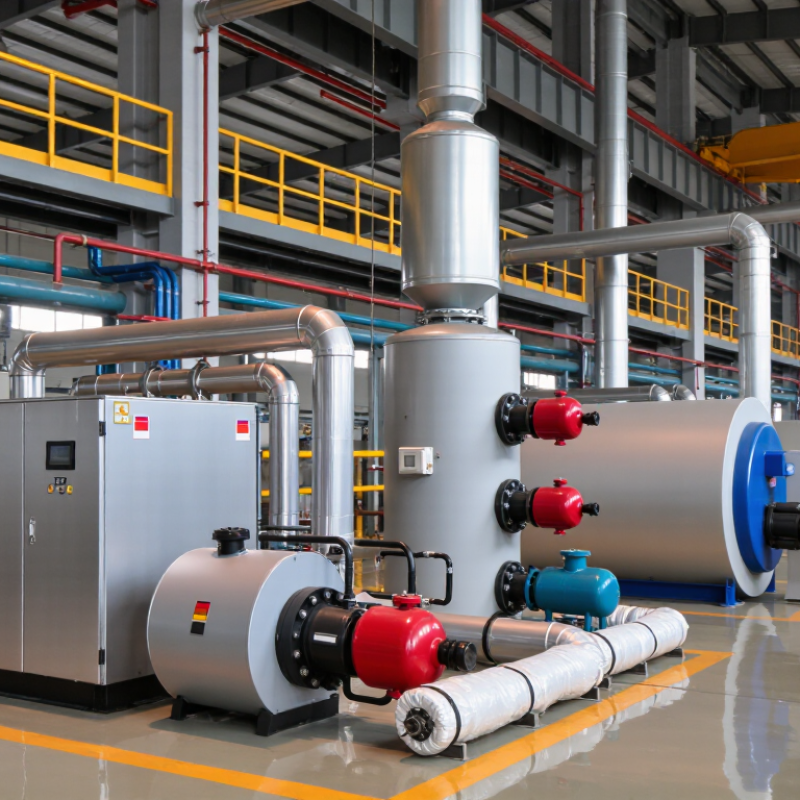
A hot oil heater, also called a thermal fluid heater, transfers heat through a circulating liquid instead of producing steam. A pump moves the oil through a closed loop. The heater raises its temperature, and the fluid carries heat to reactors, dryers, presses, or heat exchangers. It then returns for reheating.
Common designs include gas-fired, electric, and biomass-fired heaters. Gas-fired units suit high-temperature continuous production. Electric models offer precise control and lower local emissions. Biomass systems may reduce fossil fuel use, but fuel quality can change performance. The correct choice depends on temperature, load variation, available energy, and maintenance skills.
The International Energy Agency’s Energy Technology Perspectives 2024 reports that industry uses about 37% of global final energy. Thermal systems therefore deserve careful efficiency checks. A properly sized pump reduces unnecessary electrical demand. Good insulation keeps hot surfaces from losing energy. Expansion tanks manage fluid growth as temperatures rise. Safety controls monitor pressure, flow, flame, and abnormal temperature.
The fluid matters too. Its viscosity changes with age and overheating. A laboratory test can reveal oxidation or contamination before a failure occurs. This step is sometimes skipped, and that is a mistake. Even a clean-looking heater may have degraded oil, poor combustion, or restricted circulation. Operators should compare actual temperature stability, fuel use, and return-fluid conditions against commissioning records. Safety design should also follow recognized requirements, including NFPA 87 for thermal fluid heaters.
2026 Top Hot Oil Heater Types for Global Buyers - What Is a Hot Oil Heater and How Does It Work?
| Heater Type | How It Works | Typical Heat Source | Typical Operating Temperature* | Typical Thermal Efficiency* | Main Advantages | Key Considerations | Common Applications |
|---|---|---|---|---|---|---|---|
| Gas-Fired Hot Oil Heater | A burner heats a combustion chamber and transfers heat through tubes containing circulating thermal fluid. A pump sends the heated fluid to process equipment and returns it to the heater. | Natural gas, liquefied petroleum gas, or biogas | Approximately 150–320°C, depending on the thermal fluid and system design | Approximately 85–95% | Fast heat-up, high heat capacity, suitable for continuous industrial operation, and generally lower operating cost where gas is available | Requires combustion safety controls, exhaust ventilation, fuel infrastructure, and emissions management | Chemical processing, edible-oil production, asphalt, textiles, wood products, and industrial drying |
| Oil-Fired Hot Oil Heater | A liquid-fuel burner releases heat into a furnace chamber, while thermal oil flows through heating coils and transfers energy to connected process users. | Diesel, light fuel oil, or other approved liquid fuels | Approximately 150–320°C | Approximately 80–92% | Useful where natural gas is unavailable, reliable high-temperature output, and straightforward fuel storage | Fuel tanks and filtration are required; operating cost and emissions depend on fuel quality and local regulations | Manufacturing plants, heating of reactors, asphalt facilities, refineries, and process-air systems |
| Electric Hot Oil Heater | Electrical resistance elements heat the thermal fluid directly inside a pressure vessel or heating chamber. A circulation pump maintains a controlled flow through the process loop. | Electric resistance elements | Approximately 50–350°C; the practical limit depends on the fluid, element design, and insulation | Approximately 95–99% at the heater, excluding electricity-generation losses | Precise temperature control, clean operation at the point of use, low noise, compact layout, and no combustion exhaust | High electrical demand may increase operating cost; adequate electrical capacity and heat dissipation are essential | Food processing, laboratories, clean manufacturing, plastic machinery, pharmaceutical equipment, and small to medium process lines |
| Biomass-Fired Hot Oil Heater | A controlled combustion system burns solid biomass and transfers heat through a thermal-fluid coil. Ash-removal and combustion-air systems support continuous operation. | Wood chips, wood pellets, agricultural residues, or other approved biomass fuels | Approximately 150–300°C | Approximately 70–85%, depending on fuel moisture and boiler design | Can use locally available renewable fuel and reduce dependence on fossil fuels in suitable locations | Requires fuel storage, conveying equipment, ash handling, emissions control, and regular maintenance; wet fuel reduces performance | Wood processing, agricultural production, food plants, district process heating, and facilities with biomass by-products |
| Waste-Heat Recovery Hot Oil Heater | Hot exhaust gas or another process waste stream flows across a heat exchanger and transfers recovered energy to the circulating thermal fluid. | Exhaust gas, kiln gas, furnace gas, engine exhaust, or other recoverable process heat | Approximately 100–300°C, depending on waste-stream temperature | Approximately 70–90% heat-recovery effectiveness in suitable systems | Reduces fuel consumption, improves overall plant energy utilization, and can lower waste-heat emissions | Output varies with the waste stream; fouling, corrosion, pressure drop, and process interruptions must be considered | Cement, ceramics, metal treatment, glass, incineration, combined heat systems, and high-temperature manufacturing |
| Dual-Fuel Hot Oil Heater | A burner can operate with two approved fuels, commonly gas and liquid fuel, while the same closed-loop thermal-fluid circuit supplies process heat. | Natural gas plus diesel or another compatible liquid fuel | Approximately 150–320°C | Approximately 82–94% | Improves fuel flexibility and operational continuity when one fuel supply is interrupted | Higher initial cost, more complex controls, and additional maintenance compared with a single-fuel system | Critical production lines, remote plants, export-oriented factories, and facilities requiring backup fuel capability |
| High-Temperature Synthetic-Fluid System | A heater raises a specially formulated synthetic thermal fluid to a controlled temperature. The fluid circulates in a sealed loop and transfers heat without boiling at normal operating pressure. | Gas, oil, electricity, biomass, or recovered heat; the defining feature is the thermal fluid | Commonly up to 350–400°C, subject to the fluid manufacturer’s film-temperature and bulk-temperature limits | Depends primarily on the heater design and energy source | Supports higher process temperatures, low system pressure, and stable heat transfer when the correct fluid is selected | Higher fluid cost, careful fluid compatibility requirements, oxidation control, expansion-tank sizing, and leak prevention are necessary | Specialty chemicals, polymers, advanced materials, pharmaceutical processing, and high-temperature reactors |
Related Posts
-

2026 Best Hot Oil Heater Options for Global Buyers?
-

Top Tips for Choosing the Best Heater Tubular for Your Needs?
-

The Ultimate Guide to Choosing the Right Thermal Couple for Your Application
-
How to Choose the Best Bitumen Heater for Your Needs?
-
How to Choose the Right Asphalt Heater for Your Project?
-
How to Choose the Right Bitumen Heater for Your Needs?
-

Phone
-

E-mail
-

Whatsapp
Whatsapp