Choosing the right China air duct heater manufacturer and supplier requires more than comparing prices or catalog photos. An Airduct Heater must deliver stable heat, safe operation, and dependable performance inside real ventilation systems. Experienced manufacturers understand how airflow, voltage, duct size, heating capacity, and control methods affect results. They can help customers select tubular, finned, or electric heating elements for commercial, industrial, and clean-air applications.
Details matter.
A reliable supplier should explain material choices, insulation design, terminal protection, temperature controls, and maintenance requirements clearly. Factory experience is valuable, but documented testing matters too. Customers should review wiring diagrams, product specifications, inspection records, and applicable quality certifications before ordering. A professional manufacturer may also provide prototypes, sample testing, and technical support during installation. These steps reduce risks such as uneven heating, excessive energy use, or premature element failure.
No supplier fits every project.
A strong partnership depends on honest communication. Air temperature, humidity, airflow speed, installation space, and operating hours should be discussed before production begins. Some product pages appear complete, yet practical installation conditions may reveal missing information. That point deserves attention. A trustworthy China supplier will acknowledge design limits, suggest suitable improvements, and avoid promising impossible performance. This guide examines the qualities that define a capable air duct heater manufacturer, helping buyers assess technical expertise, manufacturing reliability, customization ability, and long-term service with greater confidence.
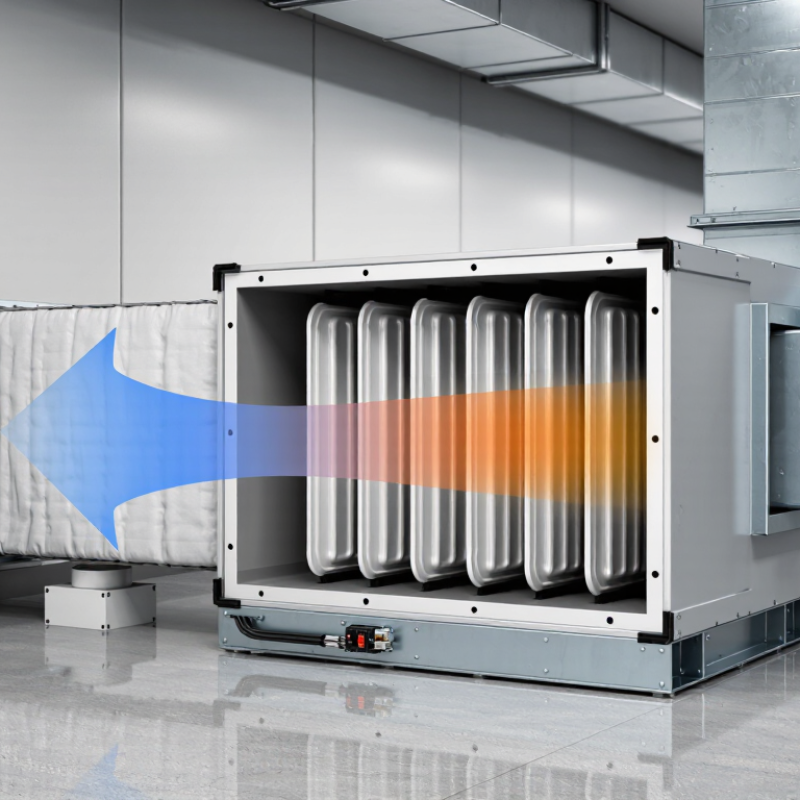
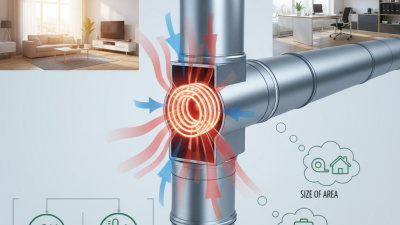
An air duct heater is an electric heating device installed inside an HVAC air duct. It raises the temperature of moving air before that air enters a room. Most units use metal resistance elements, similar to tightly controlled heating coils. When electricity passes through these elements, they become hot. The blower then carries heat through the ductwork.
The heating cycle begins when a thermostat detects that the room is too cold. A control panel sends power to the heater after confirming adequate airflow. This step matters. Without airflow, the elements may overheat quickly. Sensors monitor temperature, while relays or electronic controls adjust the heating output. Some systems use several stages, so only the needed power operates. This can reduce energy waste and temperature swings.
Proper sizing depends on airflow, duct dimensions, voltage, insulation, and required temperature rise. A technician should measure these conditions rather than guess from room size alone. In practical inspections, loose wiring and dusty elements often cause performance problems. Moisture can create additional concerns inside poorly protected ducts. A heater may be electrically sound but still deliver weak results when the fan speed is wrong. I have found that simple airflow testing often reveals more than a quick visual check. Small installation details matter.
China Best Air Duct Heater Manufacturer and Supplier?
Key Types and Applications of Air Duct Heaters
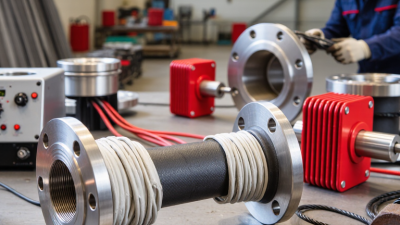
Air duct heaters warm moving air inside ventilation systems. Electric models are common because they offer clean, accurate, and quick temperature control. Open-coil heaters respond rapidly and suit moderate airflow systems. Tubular heaters provide stronger mechanical protection in dusty or demanding environments. Finned tubular elements improve heat transfer while reducing exposed hot surfaces. Each type requires correct airflow, wattage, and installation clearance.
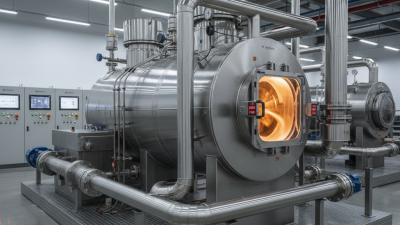
Applications vary across buildings and industrial equipment. HVAC systems use duct heaters for winter supply-air heating, reheat control, and freeze protection. They also support cleanrooms, drying chambers, warehouses, and process ventilation lines. A practical design checks duct size, air velocity, entering temperature, and available voltage. Safety controls should include airflow proving, staged heating, automatic reset limits, and over-temperature protection. A reliable manufacturer or supplier should provide tested components, wiring diagrams, performance data, and responsive technical support.
Field experience shows that oversized heaters can create unstable temperatures and unnecessary energy use. Small mistakes matter. Uneven airflow may damage elements or trigger frequent safety cutoffs. I have found that installation conditions often differ from drawings. Therefore, commissioning should measure temperature rise at several duct points. Selection is not always perfect on the first attempt. Reviewing operating data after installation can reveal better settings, improved control stages, or a more suitable heater design.
The chart shows the calculated heating capacity required for air duct heating at different airflow rates and temperature rises. Capacity is based on the standard air-heating relationship: kW ≈ 0.0003167 × airflow (CFM) × temperature rise (°C).
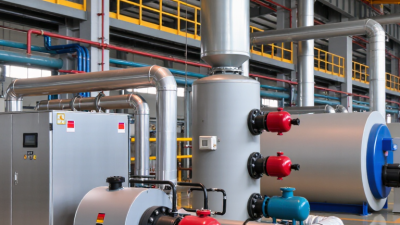
Key types and applications: Electric resistance duct heaters are commonly used for HVAC reheating, fresh-air systems, and comfort heating. Gas-fired duct heaters are suitable for larger air-handling systems and industrial ventilation. Steam and hot-water duct heaters are often integrated with central boilers or district heating systems.
China Best Air Duct Heater Manufacturer and Supplier?
How to Evaluate Chinese Air Duct Heater Manufacturers
Evaluating a Chinese air duct heater manufacturer requires more than comparing prices. Request factory videos, production records, and recent inspection reports. Check whether engineers can explain watt density, airflow limits, insulation materials, and temperature-control methods clearly. Vague answers are warning signs.
Ask for a sample matching your actual duct size and power requirement. Test its heating response, terminal connections, airflow interlock, and over-temperature protection. Measure surface temperature with a calibrated instrument. Review wiring diagrams, material certificates, test procedures, and traceability records. Reliable manufacturers should provide clear documentation for the destination market’s safety requirements.
Look closely at manufacturing details. Are heating elements evenly supported? Are terminals protected from moisture and vibration? Can the supplier control quality across repeated batches? A factory may produce an excellent sample, then struggle during mass production. That risk deserves attention.
Do not ignore communication. Technical replies should include drawings, tolerances, delivery limits, and corrective actions. Ask how failures are handled after shipment. A written replacement process is more useful than friendly promises.
No audit catches everything. A first inspection may miss packaging weakness or inconsistent insulation. Consider third-party testing and a small pilot order before full production. The cheapest quotation can become expensive when installation delays, redesigns, or field failures appear.
Choosing China’s best air duct heater manufacturer requires more than comparing prices. Manufacturing standards, customization, and quality control reveal actual capability. The IEA’s Energy Efficiency 2023 report states that buildings consume about 30% of global final energy. Heating equipment therefore needs controlled output, safe wiring, and efficient airflow.
A dependable supplier should design heaters around airflow, voltage, temperature rise, and installation space. Qualified production should reference UL 1996, applicable IEC requirements, and ISO 9001 quality procedures. Custom housings, flange dimensions, terminal layouts, and staged heating can simplify field installation. However, customization is not automatically an improvement. That assumption is risky.
Incoming inspections should verify resistance wire, insulation, terminals, and enclosure materials. Each heater should receive documented electrical, dielectric-strength, airflow, and over-temperature tests. Calibrated instruments matter. Test records should connect serial numbers with operators, materials, and inspection results. The U.S. Department of Energy identifies HVAC as a major energy use in commercial buildings, making heat-loss calculations and control compatibility important. Some suppliers still provide attractive drawings but weak validation data. Buyers should request sample reports, tolerance ranges, material certificates, and corrective-action records before approval. Small gaps remain possible, especially when projects change late. Clear revision control reduces that risk.
China Best Air Duct Heater Manufacturer and Supplier?
How to Select the Right Supplier for Your Project
Selecting an air duct heater supplier requires more than comparing online prices. Check the supplier’s manufacturing experience, engineering team, and production capacity. Ask for factory photographs, product samples, and recent project references. A reliable supplier should explain wattage, airflow, duct size, control methods, and material options clearly.
Safety evidence matters. Request test reports, quality records, and certificates suitable for your target market. The heater should include practical protection, such as over-temperature control and suitable insulation. Confirm whether the supplier performs resistance testing, insulation testing, and final inspections before shipment. Small details matter here.
Discuss customization early. Confirm voltage, heating stages, mounting space, terminal design, and delivery time in writing. Technical support should continue after installation, not end when the invoice is paid. I have seen low quotations create costly redesigns later. The cheapest option is not always economical. However, expensive equipment is not automatically better. This is where careful questions help.
Ask how the supplier handles damaged goods, replacement parts, installation problems, and warranty claims. Request a clear drawing before production. Review every dimension yourself. No checklist is perfect. A short video call with the engineer may reveal more than a polished sales page. Evaluate communication, documentation, testing discipline, and honesty together before making the final decision.
| Selection Dimension | Recommended Reference Data | Why It Matters | What to Verify with the Supplier |
|---|---|---|---|
| Heater Type | Electric duct heater with open-coil or tubular heating elements | The heater construction affects heat transfer, service life, pressure drop, and maintenance requirements. | Request the element construction, element material, mounting arrangement, and installation orientation. |
| Required Heating Capacity | Heating capacity is calculated from airflow, air temperature rise, and air density. For air, approximately 1.2 kJ is required to raise 1 kg by 1°C. | Correct sizing prevents insufficient heating, excessive energy use, and overheating protection trips. | Provide airflow, inlet temperature, desired outlet temperature, altitude, voltage, and phase. Ask for a calculation sheet. |
| Electrical Configuration | Common configurations include single-phase or three-phase power, with voltage and frequency matched to the project supply. | Incorrect voltage, phase, or frequency can reduce performance or create a safety risk. | Confirm rated voltage, frequency, phase, total current, circuit protection, terminal layout, and wiring diagram. |
| Airflow and Minimum Velocity | The required airflow and minimum face velocity depend on the element design and manufacturer’s safety limits; there is no universal value for every model. | Adequate airflow helps keep element temperature within the design range and reduces nuisance high-limit trips. | Request the minimum and maximum airflow, face velocity range, fan-interlock requirements, and airflow-proving method. |
| Temperature Control | Available control methods may include staged control, proportional control, solid-state switching, or an external temperature controller. | The control method affects temperature stability, electrical noise, component life, and integration with the HVAC system. | Check control signal type, control accuracy, switching method, sensor compatibility, and communication requirements. |
| Safety Protection | Typical protective functions include automatic-reset temperature control, manual-reset high-limit protection, airflow interlock, and overcurrent protection. | Layered protection helps reduce the risk of element overheating, equipment damage, and unsafe operation. | Request the protection circuit diagram, operating limits, trip settings, reset method, and failure-mode test records. |
| Housing and Element Materials | Galvanized steel is commonly used for general indoor applications; stainless steel may be selected for corrosive, humid, or hygienic environments. | Material selection influences corrosion resistance, structural durability, and suitability for the installation environment. | Verify material grade, coating specification, element support design, enclosure thickness, and environmental limitations. |
| Duct Size and Installation | The heater frame should match the duct cross-section, with installation clearances and airflow direction defined in the installation manual. | A proper fit reduces air leakage, installation delays, vibration, and uneven heating. | Submit duct dimensions, access direction, airflow direction, mounting details, service clearance, and insulation requirements. |
| Pressure Drop | Pressure drop varies with heater geometry, element density, airflow, and duct size; it must be provided as a tested curve or project-specific value. | Additional pressure drop increases fan energy demand and may affect the designed airflow. | Ask for pressure-drop data at the project airflow and confirmation that the fan has sufficient static-pressure capacity. |
| Compliance Documentation | Documentation may include applicable electrical-safety test reports, material declarations, wiring diagrams, risk assessments, and quality records. | Complete documentation supports approval, installation, commissioning, and future maintenance. | Confirm which local and project standards apply, and verify that certificates and reports correspond to the supplied model. |
| Factory Testing | A suitable quality plan should cover visual inspection, resistance checks, dielectric-strength testing where applicable, control-function testing, and final inspection. | Documented testing reduces the chance of wiring errors, insulation faults, and incorrect control operation. | Request sample inspection records, test equipment calibration details, inspection criteria, and a product-specific test report. |
| Customization Capability | Potential customization areas include duct dimensions, capacity, voltage, control interface, materials, connection position, and enclosure configuration. | Project-specific configuration can improve system compatibility and reduce field modification work. | Evaluate engineering drawings, revision control, prototype approval, change management, and pre-production sample procedures. |
| Lead Time and Supply Capacity | Lead time depends on heater size, controls, materials, quantity, approval requirements, and production capacity; it should be quoted in writing for the exact configuration. | Reliable delivery planning helps coordinate ductwork, electrical installation, testing, and project handover. | Request production milestones, component availability, packaging details, shipment terms, and a contingency plan for delays. |
| Warranty and After-Sales Support | A clear warranty should define coverage, duration, exclusions, spare-parts availability, technical response time, and commissioning support. | Transparent after-sales terms reduce lifecycle cost and shorten troubleshooting time. | Compare warranty conditions, service contacts, spare-parts lead time, troubleshooting documents, and remote or on-site support options. |