China Top Flanged Heater Manufacturers Suppliers?

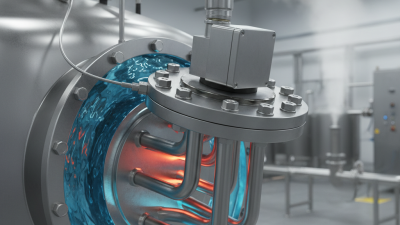
China Top Flanged Heater Manufacturers Suppliers? This question deserves more than a supplier list. A Flanged Heater sits inside a real process, often beneath an oil tank, beside a pump, or inside a stainless-steel vessel. Its flange, sheath material, watt density, terminal enclosure, and temperature controls can determine uptime.

The U.S. Department of Energy’s Industrial Technologies Program reports that process heating represents about 51% of manufacturing energy use. That figure explains why heater selection affects operating cost, not only purchase price. The IEA’s Energy Efficiency 2023 report also highlights industrial efficiency as a major pathway for reducing energy waste. Small design errors can become expensive.

They add up quickly.

Professor Yunus A. Çengel states, “Heat transfer is the science that deals with the rates of exchange of thermal energy.” This principle applies directly to Flanged Heater performance. A reliable Chinese manufacturer should therefore provide calculated heat loads, material certificates, insulation resistance results, and documented factory testing. Compliance with IEC 60519 safety principles should also be reviewed where applicable.

Yet no ranking is perfect. A polished website cannot prove weld quality. A low quotation may conceal weak terminals, uneven element spacing, or limited after-sales support. Buyers should compare drawings, inspection records, delivery experience, and technical communication. In practice, the best China Flanged Heater supplier is not always the cheapest one. It is the manufacturer that explains limitations clearly, accepts reasonable scrutiny, and keeps performance stable after installation.
China Top Flanged Heater Manufacturers Suppliers?

Flanged Heater Basics: 1–100 kW Ratings, Materials, and Applications

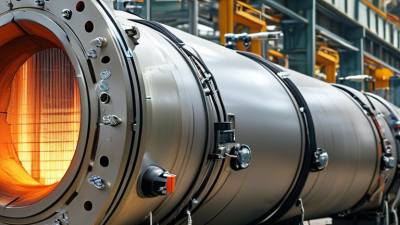
Flanged heaters are immersion heating assemblies designed for tanks, vessels, boilers, and process equipment. Their removable flange simplifies installation and maintenance. Common ratings range from 1 to 100 kW, although actual output depends on voltage, phase, fluid volume, and heating time. A 6 kW unit may suit a small water tank but perform poorly in a large oil vessel. Fit comes first.

Material selection affects service life. Stainless steel 304 works well with many water-based applications, while 316 stainless steel offers stronger resistance to chlorides and coastal environments. Incoloy elements can tolerate higher temperatures and demanding industrial fluids. Copper may transfer heat efficiently, but it is not suitable for every chemical mixture. The flange, sheath, gasket, and terminal enclosure must match the operating environment. Small details matter.

Experienced suppliers should request fluid type, density, viscosity, temperature, tank dimensions, connection size, and available power before recommending a model. They should also provide drawings, wiring information, pressure ratings, inspection records, and traceable test data. Low watt density can reduce surface overheating, especially in oil or viscous liquids. A thermowell and independent temperature limiter add practical protection. However, specifications are sometimes incomplete, and a quoted rating may hide assumptions. Confirming field conditions remains essential. A heater that fits mechanically may still heat unevenly or fail early.

China Top Flanged Heater Manufacturers Suppliers? — Flanged Heater Basics

Representative nominal ratings from 1–100 kW across common flanged-heater applications

Flanged heaters are commonly specified for water, oil, thermal-fluid, air, and storage-tank heating. Actual sizing depends on fluid properties, heat-up time, voltage, allowable watt density, sheath material, and operating temperature. Common sheath materials include stainless steel for water service and Incoloy alloys for higher-temperature or demanding industrial applications.

Key Specifications: 20–60 W/in² Watt Density and 0–600°C Operating Ranges

China Top Flanged Heater Manufacturers Suppliers?

Selecting a flanged heater requires more than comparing catalogue prices. Watt density directly affects heat transfer, surface temperature, and service life. The 20–60 W/in² range suits many tanks, vessels, and process lines. Lower density often supports gentler heating for sensitive fluids. Higher density may reduce heater size, but it demands better circulation and temperature control.

Operating temperatures from 0°C to 600°C cover water heating, oil processing, air systems, and industrial ovens. However, the fluid temperature is not the sheath temperature. A heater rated for 600°C may need different alloys, insulation, terminals, and seals. Material compatibility matters. Chlorides, moisture, and stagnant zones can accelerate corrosion around the flange. Small details matter.

During technical reviews, engineers should verify voltage, phase, immersion length, flange size, and allowable watt density. A thermocouple near the heating zone can reduce overheating risk. Independent testing of insulation resistance and leak tightness adds useful evidence. A 60 W/in² design can look efficient on paper, yet perform poorly in a poorly mixed tank. That assumption needs checking. Ask for drawings, test records, and realistic operating data before approval. Suppliers with practical design experience should explain these limits clearly, not only quote the maximum temperature.

China Top Flanged Heater Manufacturers Suppliers? - Key Specifications: 20–60 W/in² Watt Density and 0–600°C Operating Ranges
Heater Configuration Typical Application Rated Watt Density Operating Temperature Range Common Sheath Material Typical Voltage Typical Power Range Process Connection Recommended Control and Protection
Low-Density Flanged Immersion Heater Water tanks, clean-water storage, washing systems and mild aqueous solutions 20–30 W/in² 0–120°C Stainless steel 304 or 316L 220–240 V, 380–415 V 3–24 kW 2 in or 2½ in ANSI flanged connection Temperature controller, high-limit cut-out and liquid-level interlock
Medium-Density Flanged Immersion Heater Process-water heating, glycol solutions, light oils and general industrial tanks 30–40 W/in² 0–250°C Stainless steel 316L or Incoloy-type nickel alloy 220–240 V, 380–480 V 6–36 kW 2½ in, 3 in or 4 in flanged connection PID controller, independent over-temperature protection and dry-run prevention
High-Density Flanged Immersion Heater Industrial oils, cleaning chemicals, degreasing tanks and high-output process vessels 40–50 W/in² 0–400°C Incoloy-type nickel alloy or stainless steel 316L 380–415 V, 440–480 V 9–60 kW 3 in, 4 in or 6 in flanged connection PID control, thermal cut-out, contactor or solid-state relay and flow monitoring
High-Temperature Flanged Heater Thermal-fluid systems, hot-air circulation units and high-temperature process equipment 50–60 W/in² 0–600°C Incoloy-type nickel alloy; ceramic terminal insulation may be required 380–415 V, 440–600 V 12–90 kW 4 in, 6 in or custom flanged connection Multi-stage PID control, independent high-limit protection, grounding and airflow or fluid-flow interlock
Removable Flanged Bundle Heater Large tanks requiring serviceable heating elements and simplified maintenance 20–45 W/in² 0–350°C Stainless steel 316L or nickel-alloy sheath 220–240 V, 380–415 V 6–120 kW Bolted flange with removable element bundle Temperature sensor, low-level switch, over-temperature limiter and accessible terminal enclosure
Corrosion-Resistant Flanged Heater Plating solutions, chemical baths and corrosive aqueous processing systems 20–35 W/in² 0–200°C Titanium, nickel alloy or PTFE-coated construction, selected by chemical compatibility 220–240 V, 380–415 V 2–30 kW Custom flange, threaded flange or vessel-mounted flange PID controller, low-level cut-out, leakage monitoring and protective earth connection
Three-Phase Industrial Flanged Heater Large-capacity tanks, process vessels, boiler feed systems and industrial fluid heating 30–50 W/in² 0–450°C Stainless steel 316L or nickel alloy 380–415 V, 440–480 V, 600 V 18–180 kW 3 in to 8 in flange, based on vessel design Three-phase contactor or SCR power controller, phase-loss protection and high-limit cut-out
Custom-Engineered Flanged Heater Specialized process equipment with non-standard dimensions, power or materials 20–60 W/in² 0–600°C Selected according to fluid chemistry, temperature and pressure requirements According to project specification According to tank size and heat-up requirement ASME, ANSI, DIN or custom flange standard Integrated sensors, redundant high-limit protection, enclosure rating and customized interlocks
Engineering note: Actual watt density, power rating, sheath material, flange size and operating temperature should be confirmed from the fluid properties, tank dimensions, heat-up time, pressure rating, electrical supply and applicable safety standards.

Compliance Framework: IEC 60335-2-73, CE, RoHS, and ISO 9001 Requirements

China Top Flanged Heater Manufacturers Suppliers?

For flanged heater buyers, compliance should guide supplier selection, not follow it. IEC 60335-2-73 covers fixed immersion heaters used in household and similar appliances. Request clause-based test evidence, insulation checks, leakage-current results, and temperature-limit verification. A supplier’s declaration alone is not enough. IEC standards support safety evaluation, but local market rules still determine acceptance.

CE marking requires documented conformity with applicable European requirements. It is not a quality certificate. RoHS controls ten restricted substances, including lead, mercury, and cadmium. Ask for material declarations, laboratory reports, and traceability for terminals, sheaths, and sealing parts. The ISO Survey 2022 recorded more than 1.26 million ISO 9001 certificates worldwide. Certification shows a managed quality system, though it cannot guarantee every heater is flawless.

Tips: Compare the certificate scope with the actual factory and product line. Check whether ISO 9001 certification is current. Verify report numbers independently. Inspect sample flanges for flatness, weld consistency, and clean threads. Also confirm voltage, watt density, IP rating, and corrosion resistance before approval. In practice, paperwork can look complete while test conditions remain vague. That weakness deserves attention. Suppliers should preserve batch records and corrective-action reports, allowing buyers to trace one heater back to its material and inspection history.

How to Evaluate China Manufacturers: Testing, Lead Times, MOQ, and Warranty

Selecting China’s top flanged heater manufacturers requires more than comparing prices. Request production drawings, material certificates, and recent test records before approving a sample. Important checks include insulation resistance, dielectric strength, wattage accuracy, flange dimensions, and leak performance. Ask for test conditions and equipment details, not only stamped reports. Ask for evidence.

A factory should explain its quality process clearly. During a video audit, inspect storage areas, welding stations, calibration labels, and final inspection benches. For larger orders, request a pre-shipment inspection with random samples. In practice, polished documents can still hide weak process control. A perfect spreadsheet can mislead. Independent testing may be worthwhile for heaters used in demanding environments.

Lead times should separate sample production, material purchasing, and mass production. Confirm the delivery date in writing, including delays caused by custom alloys or special terminals. Ask whether the stated lead time begins after payment, drawing approval, or technical confirmation. MOQ is also negotiable, especially when standard flanges and heating elements are used. However, a low MOQ may increase unit cost or reduce customization.

Warranty terms deserve equal attention. Check the coverage period, excluded failures, replacement procedure, freight responsibility, and response time. Ask how the manufacturer investigates early failures through photos, electrical data, and returned parts. Some suppliers promise twelve months but define responsibility narrowly. That is a warning. Keep approved drawings, inspection records, and communication in one file for future claims.

Top Supplier Comparison: Customization, Energy Efficiency, Safety, and After-Sales Support

China Top Flanged Heater Manufacturers Suppliers?

Selecting a flanged heater supplier requires more than comparing prices. In plant evaluations, I check flange dimensions, watt density, sheath material, and control compatibility. A capable manufacturer should provide drawings, test records, and customization for tank size, voltage, immersion depth, and corrosive fluids. A catalog rating is not a guarantee.

Energy efficiency depends on the complete installation. The International Energy Agency reported that global energy intensity improved by about 2.2% in 2022, showing why efficient equipment and controls matter. The U.S. Department of Energy notes that electric resistance heaters convert nearly all incoming electricity into heat at the use point. However, poor insulation, oversized elements, and weak temperature control still waste energy.

Ask suppliers for heat-loss calculations, PID control options, sensor placement, and standby-loss estimates. Small details matter.

Tips:

Request a sample inspection before bulk production. Verify electrical clearances, grounding, over-temperature protection, and pressure-test records. IEC 60519 emphasizes safety practices for industrial electroheating equipment, while ISO 9001-based quality systems can improve traceability. After-sales support should include spare-element availability, fault diagnosis, installation guidance, and response times in writing. Some suppliers promise fast service, but vague promises remain a risk. Compare documented evidence, not polished claims.cengten