Choosing the right Bitumen Heater can determine whether a global paving project stays efficient, safe, and predictable. The decision involves more than comparing heating capacity or purchase prices. Bitumen grade, storage volume, climate, fuel availability, and transport conditions all influence equipment performance. A heater designed for a mild coastal site may struggle in a cold inland region. Temperature control matters because overheated bitumen can lose quality, while underheating can delay mixing and pumping. Small details matter.
Experienced contractors usually examine heating speed, insulation, burner efficiency, maintenance access, and control accuracy. Electric systems may suit urban projects with stable power supplies. Fuel-fired models can offer flexibility in remote locations, but they require careful fuel planning and ventilation. Reliable suppliers should provide test records, operating guidance, spare-part support, and clear safety documentation. Regional standards and environmental requirements also need review before equipment selection. One overlooked certificate can create expensive delays.
Yet field decisions are rarely neat. A specification sheet cannot predict every site condition. Operators may face weak power grids, changing fuel costs, or unexpected viscosity changes. That is why practical trials, supplier references, and realistic load calculations are valuable. The best choice balances performance, safety, serviceability, and long-term operating cost. It may not be the cheapest heater. It should be the one that performs consistently when weather, logistics, and production pressure become difficult. Performance must be verified, not simply promised.
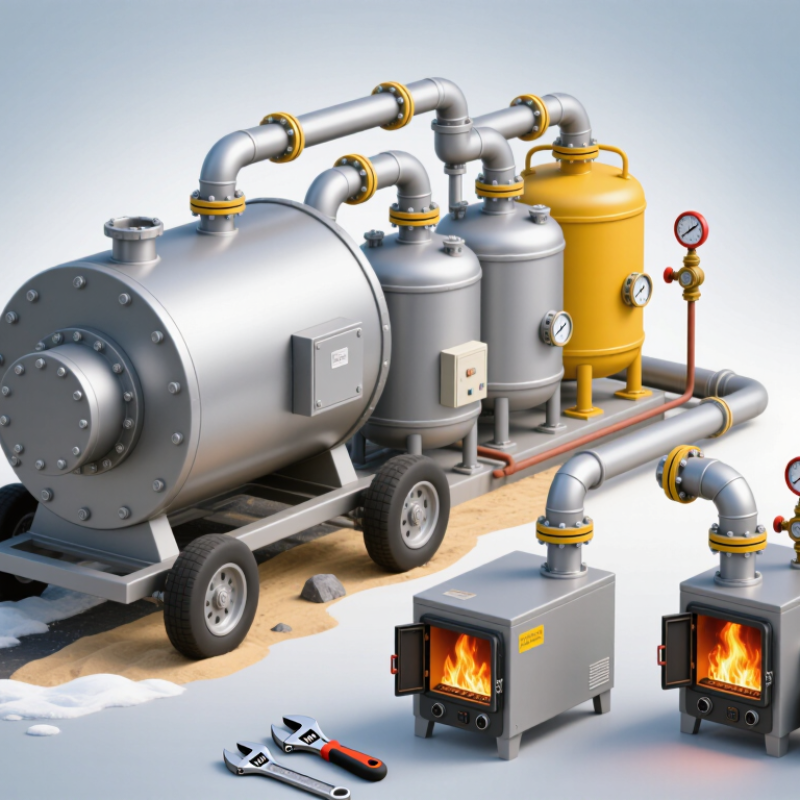
Bitumen heaters fall into three practical types: direct-fired, indirect thermal-oil, and electric models.
Direct-fired units heat the tank wall or vessel with a burner. They are compact and fast, but uneven heating can create hot spots. Indirect heaters circulate thermal oil through coils around the bitumen. This design provides steadier temperatures and reduces local overheating. Electric heaters use resistance elements and precise controls. They suit smaller sites, enclosed facilities, or projects with strict emission limits.
The working principle is simple: transfer controlled heat until bitumen reaches its pumping temperature. Many paving operations handle bitumen near 150–180°C, depending on grade and supplier guidance.
The Federal Highway Administration reports that warm-mix methods can reduce production temperatures by about 20–40°C and cut fuel use by roughly 20–35%. That makes insulation, sensors, and heat recovery important selection factors. Eurobitume’s life-cycle inventory reports bitumen production emissions at approximately 0.2 kg CO2e per kilogram, so inefficient heating should not be ignored. A heater can be powerful, yet still waste energy.
Tips: Match heater capacity to daily throughput, not tank volume alone. Check local electricity, fuel quality, altitude, and spare-part access. Use two temperature sensors. One sensor can fail quietly. Ask for test records, safety interlocks, and verified thermal efficiency. I would also allow extra heating capacity for cold mornings, but avoid oversized burners; they often cycle harshly and create unstable temperatures.
How to Choose the Right Bitumen Heater for Global Projects?
Heating capacity should match real production flow, not the largest possible output. Calculate tonnes per hour, temperature rise, tank volume, and heat loss. For example, heating 10 tonnes of bitumen by 20°C requires roughly 111 kW before insulation and exhaust losses. Cold climates may require additional capacity. An oversized heater can cycle frequently and waste fuel. I have seen this mistake on temporary sites. Bigger is not always better. The European Asphalt Pavement Association recommends maintaining controlled bitumen temperatures and avoiding unnecessary overheating, which can affect binder performance.
Temperature control deserves equal attention. Choose independent sensors, automatic burner modulation, and a reliable PID controller. Keep sensors near the actual bitumen flow, not only beside the tank wall. FHWA technical guidance reports that warm-mix technologies can reduce production temperatures by approximately 15–65°C, depending on the process. However, lower temperatures are not suitable for every binder or climate. Check project specifications carefully. A narrow control range is useful, but field calibration still matters.
Tips: Compare useful heat output, not rated fuel input. Request seasonal fuel-consumption data. Select thick insulation and a high turndown burner. Review exhaust recovery options. The International Energy Agency reports that industry consumed about 37% of global final energy in 2022. Small efficiency losses become expensive across international projects. Measure actual fuel use after commissioning. Numbers can challenge the original design.
How to Choose the Right Bitumen Heater for Global Projects?
Match Heater Design to Climate, Material, and Project Scale
A bitumen heater should match the working climate, not only the tank volume. In cold regions, wind can strip heat from exposed pipes and valves quickly. Choose insulated lines, covered tanks, and automatic temperature control. In hot climates, excessive burner capacity may create local overheating. That can damage bitumen before the material reaches the mixing point.
Material grade also matters. Conventional paving bitumen usually needs controlled heating within the supplier’s recommended range. Polymer-modified bitumen often requires tighter temperature management and stronger circulation. Eurobitume’s safe-handling guidance highlights the need to prevent overheating, splashing, and prolonged storage at elevated temperatures. A reliable heater should use indirect heating, continuous temperature monitoring, and low-level shutdown protection.
Project scale changes the correct design. EAPA’s Asphalt in Figures 2022 reported approximately 276.7 million tonnes of asphalt mix production across Europe. Large plants need stable, continuous heat, while remote road projects may value compact systems and simple maintenance more. I would not select the biggest heater automatically. It may consume more fuel and produce uneven heating during low-demand periods. A staged burner, accurate sensors, and accessible inspection points are often more practical. Small details matter. Check the hose temperature by hand only from a safe distance, never by contact. Record heating time, ambient temperature, and delivered viscosity during trial operations. Mistakes happen. The design should make them visible early.
How to Choose the Right Bitumen Heater for Global Projects?
Selecting a bitumen heater requires more than checking heating capacity. Safety features should guide the decision. Look for insulated surfaces, stable temperature controls, emergency shutoff systems, and protected electrical connections. A clear control panel helps operators respond quickly near hot material. Confirm that the equipment matches local electrical requirements and workplace safety rules. Small oversights can become expensive.
Mobility matters when projects move between road sites, depots, and isolated work zones. Strong wheels, lifting points, and compact dimensions reduce handling time. However, highly mobile equipment may have smaller tanks or reduced output. That trade-off deserves careful review. Maintenance access is equally important. Removable panels, accessible burners, and standard service parts can shorten downtime. Keep a cleaning schedule for tanks, filters, and heating surfaces. Neglecting residue seems harmless, until heating becomes uneven.
Tips: Compare the total operating cost, not only the purchase price. Estimate fuel or electricity use, service labor, transport, and expected downtime. Ask suppliers for test data under realistic ambient conditions. A heater that performs well in a warm workshop may struggle in cold, windy regions. Check manuals, inspection records, and operator training requirements before approval. In my view, a simple checklist works best, although it should be revised after the first project. Cost forecasts are never perfect. Allow a practical maintenance reserve.
Comparison of common heater configurations using a non-brand-specific engineering benchmark. Ratings use a 1–5 scale, where 5 represents stronger performance, easier handling, lower maintenance demand, or better operating-cost efficiency.
Interpretation: Indirect-fired mobile heaters generally provide a strong balance of safety and mobility for temporary or changing project locations. Electric circulation heaters can reduce on-site combustion risks and routine mechanical maintenance where reliable electrical power is available. Stationary direct-fired systems may offer efficient continuous operation but usually require stricter flame-control procedures, fixed installation, and more extensive site preparation.
When a bitumen heater crosses borders, its temperature range is only one part of the decision. Compliance documents deserve equal attention. Check electrical, fuel, pressure, emissions, and workplace safety requirements in the destination country. Ask for current test reports, declarations, manuals, and maintenance records. Do not accept a certificate without confirming its scope. Some documents cover a component, not the complete heater. That distinction can delay site approval.
Local compatibility is practical, not administrative. Confirm voltage, frequency, fuel quality, plug standards, ventilation rules, and available spare parts. In a cold inland site, thickened bitumen may need slower, controlled heating. Near a humid coast, corrosion protection and drainage deserve closer review. Measure access roads and container dimensions before ordering. A heater that fits the specification may not fit the project. Small oversights become expensive.
Supplier support should be tested before payment. Request response times, commissioning procedures, operator training, troubleshooting channels, and local service coverage. Ask who supplies a replacement sensor on a holiday weekend. If the answer is vague, record the risk and seek a written commitment. Remote guidance helps, but it cannot replace safe, qualified inspection. Review the offer with an engineer who knows the site. Ideally, run a documented acceptance test using the project’s actual power and fuel conditions. Perfect planning is unlikely. Still, honest gaps are easier to manage than hidden ones.
| Evaluation Dimension | Verified Data or Requirement | Relevant Standard, Test, or Reference | Why It Matters in Global Projects | Recommended Check |
|---|---|---|---|---|
| Bitumen Grade and Heating Range | Confirm the bitumen grade, viscosity-temperature relationship, softening point, flash point, and the supplier’s recommended storage and handling temperatures. | EN 12591 for paving-grade bitumens; ASTM D5 for penetration; ASTM D36 for softening point; ASTM D92 for flash point. | Heating requirements vary by bitumen grade. Excessive temperature can accelerate ageing and create safety risks. | Mandatory |
| Required Heating Capacity | Size the heater using batch mass, initial material temperature, target temperature, heat-up time, insulation quality, ambient conditions, and heat losses. | Basic heat-load calculation: Q = m × Cp × ΔT, with additional allowance for vessel, piping, radiation, and ventilation losses. | An undersized heater causes long cycle times, while excessive capacity may produce local overheating and unnecessary energy consumption. | Calculate |
| Heater Configuration | Choose between direct electric heating, indirect heating through thermal oil, hot gas, or another approved heat-transfer method. | Selection should consider the bitumen safety data sheet, operating temperature, contamination risk, maintenance requirements, and local fire regulations. | Indirect heating can reduce direct contact between the heat source and bitumen, while electric heating may simplify installation where reliable power is available. | Compare |
| Temperature Control | Specify closed-loop control, independent high-temperature cut-out, calibrated sensors, alarm functions, and readable local indications. | IEC 60584 for thermocouples; IEC 60751 for industrial platinum resistance thermometers; IEC 61508 may be relevant where functional safety is specified. | Stable control protects bitumen quality and helps prevent overheating, thermal degradation, and unplanned shutdowns. | Mandatory |
| Electrical Compatibility | Verify local voltage, phase arrangement, frequency, rated current, short-circuit protection, earthing system, cable requirements, and available connection capacity. | IEC 60204-1 for electrical equipment of machinery; IEC 60364 for low-voltage electrical installations; local electrical codes remain applicable. | Electrical systems differ between countries and sites. A heater designed for one supply may require a transformer, revised protection, or a different configuration elsewhere. | Mandatory |
| Hazardous Area Classification | Determine whether the installation is in a classified area because of flammable vapours, gases, or dust, and identify the required equipment protection level. | IEC 60079 series for explosive atmospheres; ATEX Directive 2014/34/EU where applicable in the European Economic Area. | Standard electrical equipment may not be suitable in hazardous locations. Certification must match the actual zone, gas group, temperature class, and installation conditions. | Site-specific |
| Enclosure and Environmental Protection | Check the enclosure protection rating, corrosion resistance, ambient temperature range, humidity, dust exposure, rain protection, and wash-down requirements. | IEC 60529 defines IP enclosure ratings; project specifications may require additional corrosion or weather-resistance testing. | Coastal, tropical, desert, and cold-weather projects impose different mechanical and electrical protection demands. | Confirm site |
| Mechanical Integration | Verify connection sizes, flange or threaded interfaces, vessel geometry, access clearance, drainage, lifting points, insulation thickness, and maintenance access. | Use the project’s piping, pressure-equipment, structural, and lifting specifications. Confirm all dimensions against approved drawings. | A heater can meet its thermal specification but still fail during installation if interfaces, clearances, or transport limitations are overlooked. | Review drawings |
| Material Compatibility | Confirm wetted-part materials, gasket materials, seals, insulation, and surface finishes are compatible with hot bitumen and the specified cleaning chemicals. | Material selection should follow the bitumen safety data sheet, temperature limits, corrosion assessment, and applicable pressure or process standards. | Incorrect materials may soften, leak, corrode, contaminate the product, or shorten service life at elevated temperatures. | Mandatory |
| Energy Efficiency | Compare rated power, insulation performance, heat-up time, standby consumption, control accuracy, and expected operating hours. | Evaluate using measured or documented energy consumption under representative load conditions rather than rated power alone. | Energy costs and fuel availability vary significantly by country, making lifecycle cost more useful than purchase price alone. | Compare lifecycle |
| Safety Documentation | Request risk assessment, operating manual, maintenance instructions, wiring diagrams, emergency shutdown logic, inspection records, and conformity documentation. | ISO 12100 provides principles for machinery risk assessment and risk reduction; local occupational safety regulations also apply. | Complete documentation supports approval, commissioning, operator training, audits, and safe maintenance in different jurisdictions. | Mandatory |
| Testing and Calibration | Define factory acceptance tests, insulation-resistance testing, functional testing, temperature verification, alarm testing, and calibration traceability. | Calibration records should be traceable to recognized national or international measurement standards; acceptance criteria should be agreed before manufacture. | Pre-shipment verification reduces commissioning delays and makes performance easier to demonstrate at the destination site. | Specify FAT |
| Transport and Installation | Check shipping dimensions, gross weight, lifting arrangements, export packaging, moisture protection, spare parts, and site assembly requirements. | Use the destination country’s customs, import, lifting, packaging, and site safety requirements. | Remote or multimodal projects may require modular construction, stronger packaging, and locally available installation equipment. | Plan logistics |
| Supplier Technical Support | Assess response time, commissioning support, multilingual manuals, remote troubleshooting, local service coverage, training, warranty terms, and spare-parts availability. | Define support obligations, response times, exclusions, and spare-parts lead times in the purchase contract. | Reliable after-sales support is especially important when the project operates across time zones or in locations with limited technical resources. | Contractually define |
| Total Cost of Ownership | Include purchase price, freight, customs, installation, commissioning, energy, consumables, planned maintenance, spare parts, downtime, and disposal. | Use a project-specific lifecycle-cost model with the expected operating profile and local energy prices. | The lowest initial price may not provide the lowest cost over the equipment’s operating life. | Compare lifecycle |
Important: Standards and regulatory requirements depend on the installation country, project specification, hazardous-area classification, and heater configuration. Confirm the latest applicable editions with the project engineer and local authority before procurement.