Who Are the Top Hot Oil Boiler Manufacturers in China?
China’s industrial landscape includes chemical plants, food processors, textile mills, and factories that need steady process heat. In these settings, a Hot Oil Boiler can transfer heat through circulating thermal fluid, often without requiring water to boil inside the heating circuit. That difference matters. So do temperature control, burner performance, circulation design, and access to replacement parts.
The International Energy Agency’s Energy Efficiency 2023 report estimates that industry accounted for about 37% of global final energy consumption in 2022. This broad figure is not a measure of boiler sales or Hot Oil Boiler efficiency. It does, however, show why industrial heat deserves careful attention. IEA Executive Director Fatih Birol has described energy efficiency as “the first fuel.” For buyers, that idea translates into practical questions: How much fuel does a unit consume under real operating conditions? Can the supplier document its test methods? What support is available after installation?
A comparison of Chinese manufacturers should examine more than catalogue temperatures or advertised capacity. Look for traceable material specifications, clear control-system details, factory testing records, and references from comparable applications. A polished brochure cannot reveal how quickly a pump seal can be replaced on a busy production line. That detail counts. Rankings also deserve caution: public data rarely compare every manufacturer on equal terms, and product quality can vary between models. The overview that follows focuses on evidence buyers can check, while recognizing that no shortlist replaces a site-specific engineering review.
What Defines a Hot Oil Boiler? Closed-Loop Heating at 200–350°C
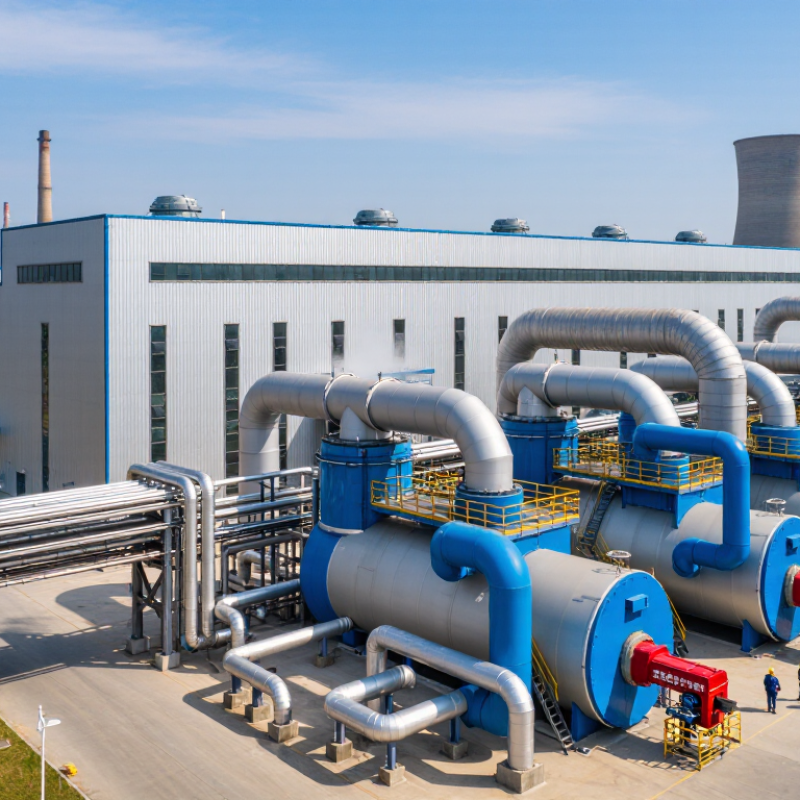
A hot oil boiler, more precisely a thermal-fluid heater, warms oil or another heat-transfer fluid in a closed loop. A pump carries the hot fluid through coils or process equipment, then returns it to the heater. Unlike steam systems, the loop can deliver heat without relying on water’s boiling point. At 200–350°C, fluid selection, flow rate, and temperature control matter.
The U.S. Department of Energy’s Improving Process Heating System Performance sourcebook estimates that process heating accounts for about two-thirds of manufacturing energy use. That scale makes heat loss worth checking: insulation, pipe supports, and return-fluid temperature can affect operating costs. The DOE report Waste Heat Recovery: Technology and Opportunities in U.S. Industry estimates that 20–50% of industrial energy input may be lost as waste heat. Actual recovery potential varies by process.
Not magic. A higher setpoint does not automatically mean better output. One easy mistake is choosing a fluid by temperature rating alone; viscosity, oxidation resistance, and compatibility with seals also deserve review. Regular sampling can reveal fluid degradation before deposits restrict narrow passages. Operators should verify the heater’s flow and temperature protections against the process duty, not just the nameplate rating.
Who Are the Top Hot Oil Boiler Manufacturers in China? - What Defines a Hot Oil Boiler? Closed-Loop Heating at 200–350°C
Brand-neutral guide to hot oil boiler fundamentals and practical criteria for evaluating manufacturers. The specifications below are general reference points, not ratings of individual companies.
| Evaluation Dimension | Typical Reference or Requirement | What to Verify with a Manufacturer |
|---|---|---|
| Operating temperature | Thermal-oil systems commonly serve processes in the 200–350°C range. The suitable range depends on the selected heat-transfer fluid and system design. | Confirm the rated continuous operating temperature and the fluid’s maximum bulk and film-temperature limits. |
| Closed-loop circulation | A pump circulates heat-transfer fluid through the heater and process equipment, then returns it to be reheated. | Check the specified circulation flow, pump requirements, piping design, and provisions for filling, draining, venting, and expansion. |
| System pressure | There is no single universal operating pressure. Design pressure depends on the fluid’s vapor pressure, temperature, static head, pump, and expansion-system arrangement. | Request the design pressure and temperature for each relevant component, along with the stated fluid and operating conditions. |
| Heater construction | Coil or serpentine-tube designs are commonly used to heat circulating thermal fluid. The heater transfers heat to the fluid without relying on water boiling in the heating coil. | Review the heat-transfer surface design, tube material, thermal-expansion provisions, and documentation for the proposed operating conditions. |
| Heat-transfer fluid | Mineral-based and synthetic thermal fluids have different temperature limits and material-compatibility requirements. | Ensure the design is matched to the fluid’s temperature limits, viscosity, vapor pressure, and supplier guidance. |
| Heat source and fuel | Heating arrangements may use different fuels or energy sources; availability and suitability depend on the project and local requirements. | Compare rated thermal output, fuel or power consumption, emissions information, and operating assumptions for the selected configuration. |
| Controls and safety | System protection commonly includes temperature control, circulation or low-flow monitoring, and safeguards appropriate to the burner or other heat source. | Ask for the control sequence, alarm and trip functions, interlocks, expansion-system design, and applicable compliance documentation. |
| Performance evidence | Efficiency and fuel-consumption figures depend on the heat source, load, fluid temperatures, and test conditions. | Request performance data that states the rating conditions, measurement basis, and included or excluded auxiliary power. |
| Manufacturing and service support | Installation, commissioning, inspection, and maintenance needs vary with the equipment configuration and site conditions. | Check the scope of supply, operating manuals, maintenance schedule, spare-parts support, commissioning assistance, and warranty terms. |
Selection note: Treat 200–350°C as a common process-temperature range, not a guarantee that every fluid or boiler is suitable across the entire range. Confirm the complete system design against the process duty, chosen fluid, applicable regulations, and site-specific conditions.
Related Posts
-
What Is a Hot Oil Heater and How Does It Work?
-
Top Hot Oil Boiler Trends for 2026 What Buyers Need to Know
-
2026 Top Hot Oil Heater Types for Global Buyers
-
Top China Heater Elements for Global Buyers to Consider?
-

How to Choose the Best Odm Oil Heater for Your Needs?
-

The Future of Energy Efficiency Why Heater Tubular Technology is Changing the Heating Industry
-

Phone
-

E-mail
-

Whatsapp
Whatsapp