Finding China’s best Flange Heating suppliers requires more than comparing prices or polished product photos. Global buyers need manufacturers that understand controlled heating, flange dimensions, installation conditions, and project deadlines. Reliable suppliers should explain their production experience clearly. They should also provide material details, temperature ranges, power requirements, wiring methods, and inspection records.
Details matter here. A heating system may look suitable but fail during field installation. The wrong voltage, uneven heating, or poor insulation can delay an entire maintenance project. Experienced Chinese manufacturers usually discuss these risks before quoting. They can recommend suitable heating cables, ceramic pads, flexible heaters, temperature sensors, and control cabinets for specific flange sizes. Good technical communication is essential.
Ask for evidence.
Factory audits, sample testing, and traceable quality documents strengthen supplier evaluation. Buyers should check whether drawings are reviewed before production. They should also confirm packaging quality, spare parts, lead times, and after-sales support. International experience can help, but it should not replace verification. Some supplier claims may sound impressive and remain difficult to prove. That is worth considering.
This guide examines practical criteria for selecting China-based Flange Heating suppliers. It focuses on engineering capability, manufacturing consistency, customization, documentation, and communication reliability. The goal is not to declare one universal “best” supplier. Requirements differ between oil and gas maintenance, pressure vessel fabrication, pipeline work, and industrial repair. A dependable choice is the supplier that matches the application, supports safe operation, and responds responsibly when conditions change.
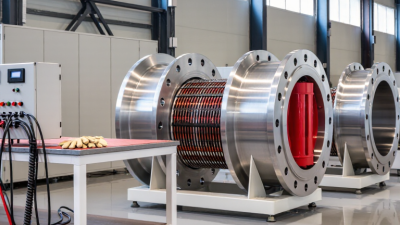
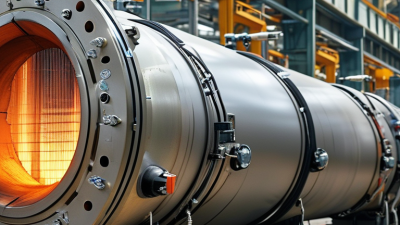
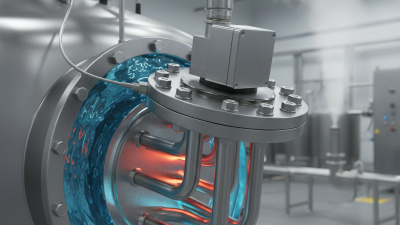
Flange heaters are electric heating elements mounted on a flange or circular support plate. They heat liquids, gases, and process vessels through direct contact or controlled surface transfer. Common applications include oil tanks, water systems, chemical vessels, and industrial pipelines.
Inside the heater, electrical resistance wire converts power into heat. A protective metal sheath surrounds the wire. When electricity flows, the sheath warms evenly across the flange surface. Temperature sensors and controllers then regulate the output. This prevents overheating and reduces unnecessary energy use. The result is steady heating near valves, tanks, or pipe connections.
In practical installations, fit matters greatly. A small gap can create uneven heating. Poor insulation may also waste energy around the vessel wall. Maintenance teams should check voltage, flange dimensions, material compatibility, and operating temperature before installation. Moisture protection is essential in outdoor environments. A damaged cable can become a serious hazard.
Reliable suppliers should provide clear drawings, test records, material details, and operating instructions. They should also explain how the heater performs under real working conditions. Some specifications look impressive on paper but remain unclear in use. That deserves careful questioning. Buyers should request sample calculations for power density, heating time, and temperature control. These details often reveal whether the design suits the application.
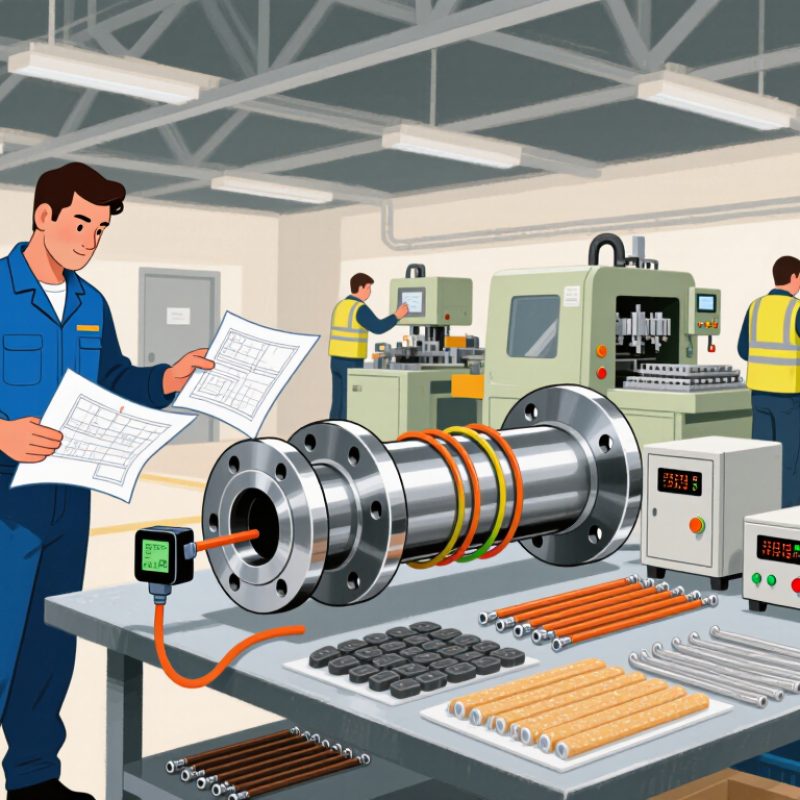
Chinese flange heating suppliers can support global projects with flexible engineering and practical production capacity. Many factories handle custom flange diameters, bolt patterns, wattage, voltage, and temperature ranges. This matters when equipment must fit an existing pipe system. A supplier can also discuss stainless steel grades, insulation layers, thermocouple positions, and moisture protection before production begins. These details reduce costly installation changes.
Experienced suppliers usually provide dimensional drawings, material records, resistance checks, and temperature test reports. Buyers should request sample approval before ordering large quantities. Clear documentation supports traceability and helps project engineers review safety requirements in different markets. Chinese manufacturers may also offer shorter development cycles because machining, assembly, and testing are often coordinated in one facility. That can simplify communication during revisions.
The process is not flawless. A low quotation may hide weaker insulation or limited testing. A drawing can still miss a field condition. I would compare inspection methods, response times, packaging details, and after-sales support, not only unit price. Video inspections and recorded test data can strengthen trust when teams work across time zones. Suppliers that explain technical limits openly are usually more reliable than those promising every result. Small pilot orders remain wise, especially for unusual flange sizes or high-temperature applications.
Choosing China’s best flange heater manufacturer requires more than comparing prices. Start with technical fit. Check flange size, voltage, wattage, heating length, operating temperature, and target medium. Ask whether the supplier uses traceable materials, controlled welding, and calibrated testing equipment. Reliable manufacturers should provide drawings, inspection records, and clear tolerances before production.
Tips: Request a sample or pilot order. Compare insulation resistance, surface temperature, response time, and packaging quality. Review certifications that match your destination market. Factory photos are useful, but an independent audit or live video inspection offers stronger evidence. Also, confirm lead times and spare-part support in writing.
A professional supplier will explain design limits instead of promising everything. Ask how they prevent hot spots, moisture entry, and terminal damage during transport. Evaluate communication quality, engineering response, and change-control procedures. A low quotation may hide weaker materials or incomplete testing. Your comparison may still be imperfect, especially when suppliers share similar documents. Recheck every specification against your application, not only the sales proposal. Good sourcing feels less like buying a heating part and more like reducing operating risk.
The chart summarizes commonly specified engineering ranges used when comparing flange heater manufacturers for international projects. Typical requirements include customized power, voltage compatibility, sheath material, operating temperature, and flange size. Actual specifications should be confirmed against the supplier’s drawings, test reports, and applicable international standards.
When sourcing flange heating equipment from China, buyers should inspect more than price and delivery promises. A reliable supplier can explain watt density, temperature range, flange dimensions, and duty cycle without vague claims. Ask for drawings, wiring diagrams, and sample inspection records. Real experience shows in the details.
For metal parts, request EN 10204 3.1 material certificates and batch traceability. Confirm the heating element’s insulation resistance, earth continuity, and overtemperature protection. The factory should provide test methods, acceptance limits, and calibrated instrument records. Check whether the stated IP rating matches the installation environment, especially near washdown areas or outdoor cabinets. CE, UKCA, UL, or CSA documentation may apply, but only for relevant markets and exact models. A logo alone proves little.
Quality management certification, such as ISO 9001, supports controlled purchasing and corrective actions. It does not replace product testing. Request a declaration of conformity, risk assessment, user manual, and emergency shutdown guidance. For critical applications, use a witnessed factory acceptance test with temperature mapping and load checks. Verify spare-part availability and technical response times before signing. One uncomfortable lesson remains: polished documents can hide weak process control. Independent inspection may be worth the added cost.
| Evaluation Dimension | Relevant Standard or Regulation | What Buyers Should Check | Typical Evidence or Acceptance Criteria | Applicability |
|---|---|---|---|---|
| Flange dimensions and pressure rating | ASME B16.5 or EN 1092-1 | Confirm nominal size, facing type, bolt-hole pattern, flange thickness, pressure class, and temperature rating. | Approved dimensional drawing, material designation, pressure-temperature rating, and inspection report. | Required when the heater is integrated with a flanged pipe, vessel, or pressure boundary. |
| Large-diameter flange design | ASME B16.47 | Check whether large nominal pipe sizes use the correct series, drilling, facing, and pressure class. | Dimension report matching the selected series and the purchaser’s piping specification. | Applicable to large-diameter flanges covered by the standard. |
| Pressure equipment compliance | EU Pressure Equipment Directive 2014/68/EU | Determine whether the complete heated assembly qualifies as pressure equipment or an assembly placed on the EU market. | Technical documentation, conformity assessment records, declaration of conformity, and CE marking where legally required. | EU projects involving pressure equipment; not automatically applicable to every flange heater. |
| Metal material verification | EN 10204; ASTM A182 or ASTM A240, as specified | Verify the grade, heat number, chemical composition, mechanical properties, and corrosion suitability of the flange and heater sheath. | EN 10204 Type 3.1 inspection certificate, positive material identification where required, and traceable heat numbers. | Recommended for industrial, corrosive, high-temperature, and pressure applications. |
| Welding quality | ISO 3834 and ISO 5817 | Check welding procedures, welder qualifications, heat input controls, inspection methods, and allowable weld imperfections. | Qualified welding procedure specifications, welder records, visual inspection, and non-destructive testing reports where specified. | Applicable when the flange, terminal housing, sheath, or pressure boundary is welded. |
| Electrical heating safety | IEC 60519-1 and IEC 60519-2 | Review protection against electric shock, abnormal temperature, insulation failure, grounding faults, and unintended energization. | Routine test records covering insulation resistance, dielectric strength, protective-earth continuity, power input, and functional operation. | Relevant to industrial electroheating equipment and assemblies. |
| Electrical control-panel safety | IEC 60204-1 | Check disconnecting means, overcurrent protection, emergency stop functions, control wiring, labeling, and protective bonding. | Electrical schematic, risk assessment, functional test report, and documented protective-bonding test results. | Applicable when the supplier provides a control cabinet or integrated electrical controls. |
| Ingress protection | IEC 60529 | Select an enclosure IP rating suitable for dust, water, washdown, outdoor exposure, and the installation environment. | Declared IP rating supported by design documentation or test evidence for the complete enclosure. | Applicable to terminal boxes, control enclosures, and exposed electrical connections. |
| Temperature control and overheating protection | Project specification and applicable machinery or process-safety requirements | Verify sensor location, control accuracy, independent high-limit protection, dry-fire protection, and alarm or shutdown logic. | Calibration certificates, temperature-uniformity results, alarm tests, and set-point verification. | Essential for fluids or materials that can degrade, ignite, freeze, or overheat. |
| Quality management system | ISO 9001 | Confirm that design, purchasing, production, calibration, nonconformity handling, and corrective actions are controlled. | Valid certificate issued by an accredited certification body, with the correct manufacturing scope and site address. | Strongly recommended for repeat orders and safety-critical industrial equipment. |
| Environmental and occupational safety management | ISO 14001 and ISO 45001 | Review environmental controls, hazardous-material handling, worker safety procedures, and incident management. | Current certificates with an appropriate manufacturing scope; verify independently rather than relying only on a logo. | Useful supplier-screening criteria; normally not a substitute for product conformity. |
| EU chemical and substance restrictions | RoHS Directive 2011/65/EU and REACH Regulation (EC) No 1907/2006 | Determine whether the supplied heater or control equipment falls within the relevant product scope and substance restrictions. | Material declarations, supplier substance statements, and an EU declaration of conformity where applicable. | Applicable according to product type, intended market, and legal scope. |
| Electromagnetic compatibility | EU EMC Directive 2014/30/EU or the destination market’s EMC requirements | Check emissions and immunity performance when the heater includes switching controls, sensors, variable-speed equipment, or electronic controllers. | EMC test reports or technical justification for the complete electrical assembly. | Relevant to electrically controlled systems; requirements vary by market and configuration. |
| Factory acceptance and traceability | Purchaser inspection and test plan; ISO 9001 control principles | Require serial-number traceability from raw material through assembly, testing, packing, and shipment. | Inspection and test plan, final inspection report, calibration records, photographs, packing list, and serial-number register. | Recommended for all export orders, particularly customized or high-value equipment. |
| Pre-shipment performance testing | Approved purchase specification and agreed FAT procedure | Confirm rated voltage, power output, resistance tolerance, leakage current, insulation resistance, controls, alarms, and shutdown functions. | Signed factory acceptance test report with test instruments identified and calibration status recorded. | Recommended before shipment; exact test limits must come from the approved design and contract. |
Note: Standards and certifications should be selected according to the heater design, pressure conditions, electrical configuration, installation environment, and destination-market regulations. Buyers should verify certificate validity, scope, issuing body, and whether the documentation covers the supplied product or assembly.
Choosing a Chinese flange heating supplier requires more than comparing prices. Define the application before contacting factories. Record flange diameter, material, operating temperature, voltage, wattage, heating area, and installation space. A clear specification prevents expensive misunderstandings.
Ask for drawings, wiring diagrams, material certificates, and test records. Confirm temperature uniformity, insulation resistance, surface treatment, and control accuracy. Request a sample or small trial order before approving production. Examine the heater physically. Check cable length, terminal protection, flatness, and label information. These details often reveal manufacturing discipline.
Audit the supplier’s process through video calls, third-party inspections, or an on-site visit. Verify whether design, assembly, testing, and packaging occur at the stated facility. Review export experience, response speed, spare-part support, and warranty terms. Do not rely on certificates alone. Their scope and validity matter. Include inspection standards, delivery dates, replacement procedures, and payment milestones in the contract. Use secure, traceable payment channels and clarify customs documents with your logistics provider.
The lowest quotation can hide weak insulation or inconsistent heating. A higher price is not automatically safer either. Compare measurable evidence. Some buyers overlook after-sales communication because the sample performs well. That is a mistake. Ask how faults are diagnosed across time zones and whether technical drawings can be revised. Your first supplier choice may still be imperfect, so keep test results, photographs, and written approvals for every batch.